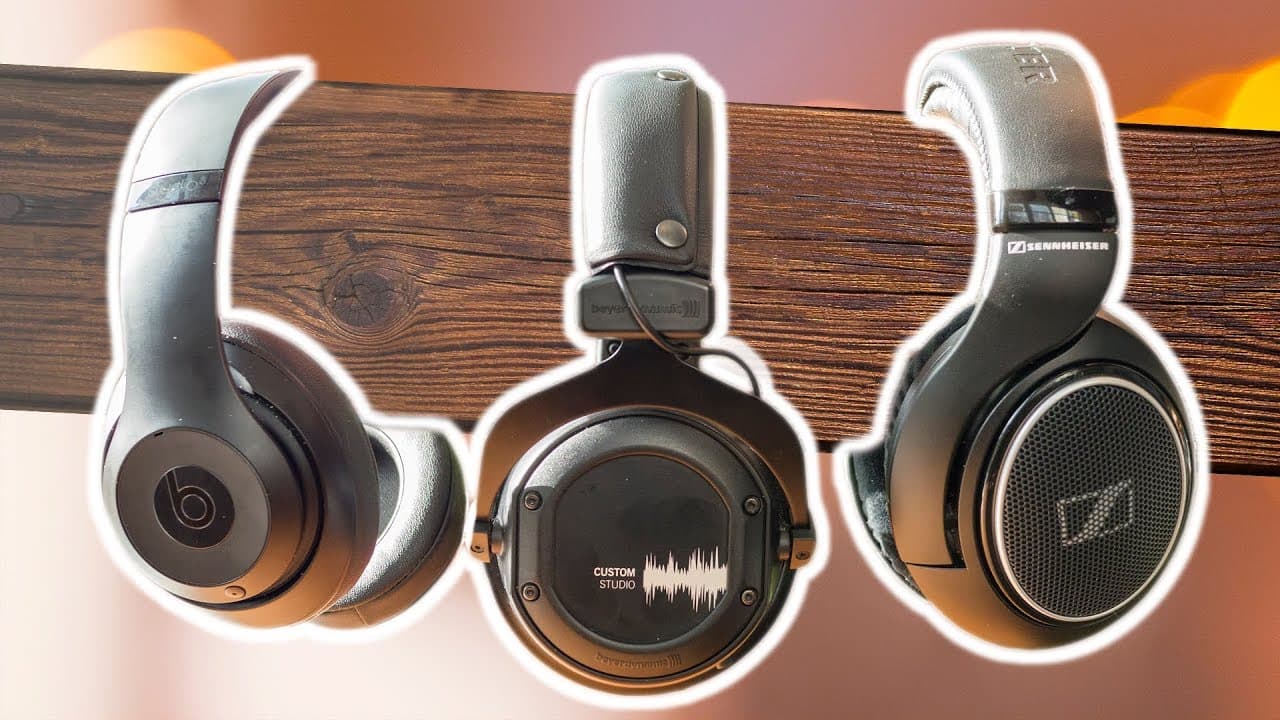
Closed‑Back Headphones with Active Noise Cancellation: Find Your Perfect Pair
If airplane roar, office HVAC, or city traffic constantly interrupts your listening, you need a headphone that blocks external noise and delivers sound quality you can trust. Closed‑back designs already seal off a lot of ambient sound, but modern active‑noise‑cancellation (ANC) chips push isolation further by generating anti‑phase sound waves that silence low‑frequency rumble. This guide walks you through the key specs, trade‑offs, and type‑focused recommendations so you can choose a pair that fits your primary use case—whether it’s a lightweight travel set, a reference‑grade studio monitor, or an audiophile‑grade listener.
Quick picks
- Travel‑focused ANC closed‑back headphones – lightweight, foldable, long battery life.
- Studio‑grade ANC closed‑back monitors – neutral tuning, transparent cancellation, detachable cables.
- Audiophile‑focused ANC closed‑back headphones – premium drivers, customizable sound signatures, luxurious build.
- Budget‑friendly ANC closed‑back headphones – solid cancellation, decent sound, value‑oriented pricing.
- Hybrid ANC headphones with customizable EQ – app‑driven sound shaping, multipoint Bluetooth, versatile for work‑from‑home.
What to look for
Active Noise Cancellation Technology
ANC varies by microphone layout and DSP algorithms. Feed‑forward mics sit outside the ear cup, feedback mics sit inside, and hybrid systems combine both for wider frequency coverage. Look for adaptive ANC that auto‑adjusts to changing environments.
Driver Design & Frequency Response
Larger 40 mm–50 mm drivers deliver deeper bass and higher SPL. Planar‑magnetic or hybrid dynamic‑balanced‑armature drivers can offer tighter low‑end control. Aim for a response that covers at least 20 Hz–20 kHz; a flat curve is ideal for studio work, while a slight bass lift suits casual listening.
Sound Signature & Tuning
Choose between neutral (reference) tuning for accurate mixing or a V‑shaped curve that boosts bass and treble for a lively feel. Many ANC headphones include an app‑based EQ with preset curves and custom shaping.
Comfort & Build Quality
Closed‑backs need a good seal, so priority goes to memory‑foam cushions (leather or breathable fabric) and a balanced clamping force. Metal alloy headbands add durability without excess weight. Travel models often feature foldable hinges and a compact case; studio models favor rigid frames for stability.
Battery Life & Power Management
A solid pair should last 15–20 hours with ANC on and offer quick‑charge (e.g., 5 min for 1 hour playback). Look for Bluetooth 5.0+ to reduce power draw and an ANC‑off mode for extended runs when you only need passive isolation.
Connectivity & Codec Support
For high‑resolution streaming, support for aptX‑Adaptive, aptX HD, LDAC, AAC is valuable. Gamers should prioritize low‑latency codecs like aptX Low Latency. Verify multipoint pairing and a 3.5 mm wired input (or balanced 2.5 mm) for DAC use.
Additional Features
Ambient or “talk‑through” modes let external conversation in without removing the headphones. Touch controls, dedicated ANC buttons, and a companion mobile app for EQ, firmware updates, and sound profiles add convenience. For calls, look for dual‑beam mics with noise‑reduction.
Our picks
Travel‑Friendly ANC Closed‑Back Headphones
Ideal for planes, trains, and cafés. Look for a chassis under 250 g, foldable cups, and a compact carrying case. Hybrid ANC handles both low‑frequency rumble and higher‑frequency chatter, while a slightly warm sound signature keeps the music lively. Expect 15 hours of playback with ANC and a quick‑charge that adds an hour from a 5‑minute charge. Adaptive ANC automatically tunes to ambient changes, and breathable memory‑foam cushions prevent ear fatigue.
Shop this type: Check price on Amazon →
Studio‑Grade ANC Closed‑Back Monitors
For mixing and mastering, prioritize neutral, reference‑grade sound and a transparent ANC system that adds no coloration. Look for detachable balanced cables, high‑impedance (32 Ω–50 Ω) drivers, and sturdy metal frames. Though heavier (300‑350 g), they compensate with replaceable ear pads for marathon sessions. Battery life stays respectable at 18 hours, but most pros keep a wired connection handy to eliminate any chance of power loss.
Shop this type: Check price on Amazon →
Audiophile‑Focused ANC Closed‑Back Headphones
These pair premium planar‑magnetic or large‑diameter dynamic drivers with high‑quality hybrid ANC. Low‑distortion circuitry and built‑in high‑resolution DACs preserve FLAC or DSD nuance. Expect a warm, detailed signature with controlled bass extension. Build materials include genuine leather pads, brushed aluminum frames, and wooden or carbon‑fiber cups. Battery life is a bit lower (12‑14 hours) due to power‑hungry drivers, but fast‑charging USB‑C and a standby mode help conserve energy.
Shop this type: Check price on Amazon →
Budget‑Conscious ANC Closed‑Back Headphones
For a solid ANC experience without premium price tags, focus on feed‑forward mic arrays and a tight passive seal. 40 mm dynamic drivers tuned for balanced sound (often with modest bass boost) keep the price low. Expect 10‑12 hours of battery life with quick‑charge support, and a simple single‑button control layout. Synthetic leather cushions and a plastic‑reinforced headband provide adequate comfort for daily commutes.
Shop this type: Check price on Amazon →
How to choose
- Rank your primary use case – travel, studio work, high‑fidelity home listening, or occasional ANC.
- Match form factor to lifestyle – foldable, lightweight units for travel; rigid, heavy builds for studio or audiophile setups.
- Prioritize driver and tuning – neutral drivers for mixing, V‑shaped for casual enjoyment, planar‑magnetic for ultimate detail.
- Check comfort – memory‑foam cushions, clamping force, and breathable materials matter for long sessions.
- Review battery and power options – at least 15 hours with ANC on, plus quick‑charge.
- Verify connectivity – codec support, multipoint pairing, and wired input for DAC use.
- Test features – ambient mode, app EQ, and mic quality if you’ll use the headphones for calls.
By aligning these criteria with how you listen, you’ll land on a closed‑back ANC headphone that feels custom‑made for you.
FAQ
What’s the difference between feed‑forward and hybrid ANC?
Feed‑forward ANC uses external microphones to capture sound before it reaches your ears, while hybrid ANC adds internal (feedback) microphones for more precise cancellation across a broader frequency range, especially low‑frequency rumble.
Can I use closed‑back ANC headphones with a DAC for better sound?
Yes. Most models include a 3.5 mm input that lets you bypass Bluetooth and connect directly to a DAC or audio interface, preserving high‑resolution detail.
Are ANC headphones safe for long‑term listening?
ANC itself doesn’t harm hearing, but it can enable higher volume levels because external noise is reduced. Follow the 60/60 rule: listen at no more than 60 % of max volume for up to 60 minutes at a time.
Do all ANC headphones support ambient or “talk‑through” mode?
Most modern ANC headphones include some form of ambient mode, but effectiveness varies. Some offer full transparency while others only let a small amount of background noise through.
How does battery life differ between ANC on and off?
With ANC engaged, power draw increases; expect roughly 10‑20 % less runtime compared to the same headphones with ANC disabled. Many models display separate battery estimates for each mode.
Is there a noticeable sound quality loss when ANC is active?
High‑quality ANC chips aim to be transparent, but some implementations introduce a subtle “pressure” or tonal shift, especially in the low‑mid range. Audiophile‑grade models minimize this effect, while budget units may show a more noticeable change.
Can I pair ANC headphones with two devices at once?
Multipoint Bluetooth pairing is common in higher‑end models, allowing simultaneous connections to a phone and a laptop. Check the specifications if this feature is essential for you.
Bottom line
Closed‑back headphones with active noise cancellation give you the best of both worlds: natural isolation from sealed ear cups plus dynamic silence from modern ANC. By evaluating ANC architecture, driver quality, sound tuning, comfort, battery life, and connectivity, you can match a pair to your exact listening scenario—whether you’re jet‑setting, mixing tracks, or enjoying high‑resolution music at home. Use the type‑based recommendations above as a roadmap, and you’ll find a closed‑back ANC headphone that blocks the world out while letting your favorite music shine.