How to Calculate Calorie Needs for Ultra‑Training (and Fuel Your Miles Smartly)
If you’ve ever stared at a nutrition log and wondered why you still hit the wall during a 80‑km run, the problem is not your pace—it’s an inaccurate calorie estimate. Too few calories drain glycogen, too many add weight that slows you down. This guide shows you how to calculate daily energy expenditure, adjust for the unique stresses of ultra‑training, and build a flexible fueling plan that keeps performance high and the gut happy.
By the end of this post you’ll know how to:
- Compute your Basal Metabolic Rate (BMR).
- Add training‑specific factors like long runs, back‑to‑back days, and altitude.
- Fine‑tune the estimate with data from wearables and nutrition logs.
- Choose tools and products that let you hit those targets without guesswork.
Quick picks
- Baseline calculator – a simple spreadsheet for everyday calorie needs.
- Training‑adjusted model – adds long‑run and back‑to‑back effects for high‑volume weeks.
- Real‑time tracking toolkit – GPS watch + nutrition app + food journal for day‑by‑day updates.
- Simple nutrition‑first approach – macro ratios matched to total calories for runners who prefer rules of thumb.
Pick the method that matches your comfort with data and the complexity of your training plan.
What to look for
1. Basal Metabolic Rate (BMR)
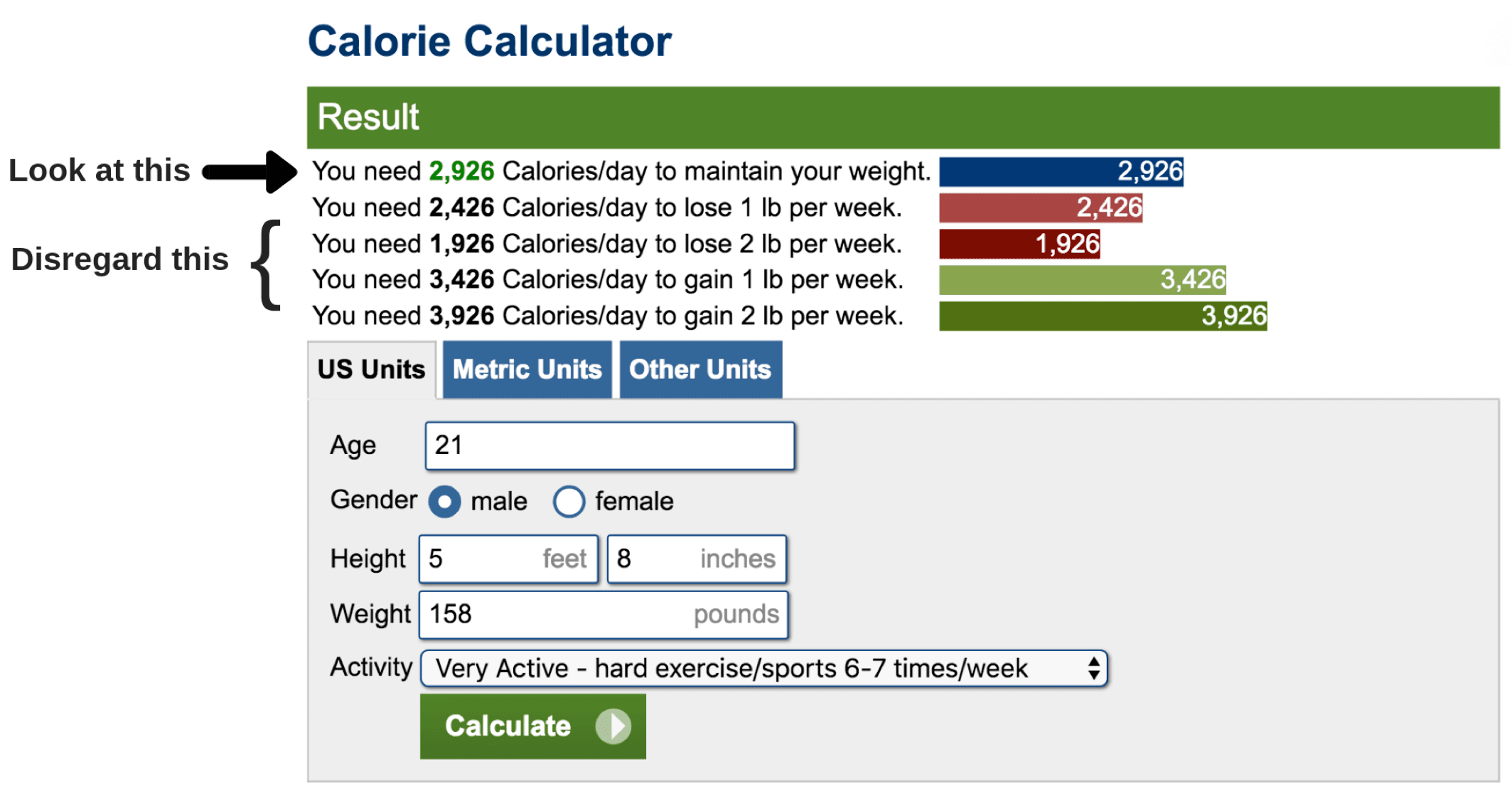
Use the Mifflin‑St Jeor or Harris‑Benedict equation. Both need age, sex, weight, and height. The result differs by less than 5 %—choose whichever is easier to plug into a calculator.
2. Activity factor (AF) for daily life
Multiply BMR by an activity factor reflecting non‑training movement. The scale runs from 1.2 (sedentary) to 1.9 (very active). Ultra‑trainers usually sit at 1.5–1.6 on off‑days and 1.75+ on heavy‑volume days.
3. Training Energy Expenditure (TEE)
A practical rule: 0.9 kcal · kg⁻¹ · km⁻¹ for flat running. Add 10–20 % for hills, trail technicality, or altitude. Sum the extra calories from each session and add them to the AF‑adjusted BMR.
4. Recovery & sleep cost
Recovery still burns calories—muscle repair, glycogen replenishment, and elevated heart‑rate variability all demand energy. Add 10–15 % of total training calories on recovery days, especially after back‑to‑back long runs.
5. Macro distribution
Typical ultra‑day ratios: 55–65 % carbs, 15–20 % protein, 20–30 % fat. Light‑day plans can shift toward higher fat to spare glycogen.
6. Real‑world validation tools
Wearable GPS watches with heart‑rate‑based calorie estimates, paired with a food‑logging app, create a feedback loop. If the watch’s “calories burned” consistently exceeds your calculated total by >200 kcal, adjust your activity factor or running multiplier.
7. Race‑day buffers
Altitude, temperature, and pacing swing calorie needs dramatically. Build a +10 % buffer into your weekly plan so you never scramble for fuel mid‑ultra.
Our picks
Baseline Calculator Spreadsheet
A clean template asks for age, sex, weight, height, and weekly mileage. It plugs the numbers into Mifflin‑St Jeor, applies an activity factor, and adds run calories using the 0.9 kcal · kg⁻¹ · km⁻¹ rule. Hill percentages and altitude adjustments auto‑populate, giving a daily calorie goal for each training day.
Best for: Runners who love a one‑time setup and want full visibility of every variable.
Trade‑off: Requires manual updates when mileage or weight changes.
Shop this type: Check price on Amazon →
Real‑Time Tracking Toolkit (GPS Watch + Nutrition App)
Pair a GPS watch that estimates calories from heart‑rate and distance with a food‑tracking app that logs meals by barcode. Sync the two to see “calories in vs. calories out” instantly and spot gaps before they affect training.
Best for: Data‑driven athletes training outdoors who need instant feedback.
Trade‑off: Watch estimates can drift at high altitude or extreme temperatures; occasional manual calibration is wise.
Shop this type: Check price on Amazon →
Simple Macro‑First Nutrition Pack (Carb‑Focused Gels + Protein Bars)
High‑carb gels (≈25 g carbs, 100 kcal) and protein‑rich bars (≈15 g protein, 200 kcal) provide a quick way to hit macro targets without a scale. Multiply the number of gels and bars by their calorie values for a rough intake estimate.
Best for: Runners who prefer a rule‑of‑thumb system and need lightweight, on‑the‑go fueling.
Trade‑off: Less precise than a full food log; a few trial runs are needed to fine‑tune the number of gels per mile.
Shop this type: Check price on Amazon →
How to choose
- Assess your comfort with numbers. If spreadsheets feel like a chore, skip the baseline calculator and go straight to a watch‑plus‑app combo that does the math for you.
- Match the toolset to your training volume. One‑hour runs need only a modest calorie buffer; three‑plus hour ultras demand the full suite: baseline calculation, daily tracking, and on‑the‑go fueling packs.
- Test and iterate. Run a week using your chosen system, then compare the watch’s calorie burn, your food‑log totals, and how you felt (energy, GI comfort). If you consistently under‑fuel, increase the activity factor or add another gel per hour. If you gain weight, trim the buffer.
The optimal method is the one that lands you near your target without sacrificing performance or comfort.
FAQ
How accurate is the 0.9 kcal · kg⁻¹ · km⁻¹ running multiplier?
It’s reliable for flat, moderate‑intensity road running. Trail technicality, steep climbs, or very high speeds can push the value to 1.1 kcal · kg⁻¹ · km⁻¹. Adjust upward by 10–20 % for demanding terrain.
Should I recalculate my calorie needs every month?
Yes. Body weight, training volume, and age all shift the numbers. A quick monthly update—especially after a cut or gain phase—keeps the plan aligned with reality.
What if my wearable’s calorie estimate is far lower than my spreadsheet?
Wearables often underestimate because heart‑rate zones miss muscular effort on steep or technical sections. Increase your activity factor by 0.1 or add a 10 % buffer for those sessions.
How many carbs per hour should I aim for during a 100‑km race?
Most ultra‑runners target 60–90 g of carbs per hour, roughly 2–3 gels plus a bite‑size carb snack (rice balls, fig bars) each hour.
Do I need protein during the race?
Protein isn’t a primary fuel, but 15–20 g per hour helps preserve muscle and reduces delayed‑onset soreness. Small snacks like nut‑butter packets or soy jerky work well.
Can I use the same calorie plan for training at altitude?
Altitude raises basal metabolic rate by about 5–10 % depending on elevation. Add that percentage to both BMR and training calories, then test on a short altitude hike before committing to a full block.
Should I count calories on rest days?
Absolutely. Even on rest days your body repairs, which can cost 200–400 kcal extra, especially after ultra‑long runs. Keep the baseline plus a modest recovery buffer to avoid overnight deficits.
Bottom line
Calculating calorie needs for ultra‑training is a series of clear steps: determine BMR, apply a realistic activity factor, add the extra burn from each session, and validate with wearables and food logs. Choose tools that match your data comfort level, and always build a small buffer for race‑day variables. With a reliable calorie plan you’ll stay fueled, stay strong, and cross the finish line feeling purposeful, not depleted.