Stainless Steel Cookware Set vs Nonstick for Durability: Which Holds Up Best Over the Years?
If your pans warp, lose their coating, or become impossible to clean, you’re stuck buying replacements that dent your budget and clutter your cabinets. Deciding between stainless steel and nonstick hinges on how each material ages under daily heat, scrubbing, and occasional misuse. This guide breaks down construction, heat distribution, upkeep, and wear so you can match the cookware to your cooking style and avoid premature failures.
Quick picks
- Heavy‑gauge stainless steel set for searing and oven use – ideal for chefs who need a pan that can take high heat and develop a natural patina.
- Premium hard‑anodized nonstick set for low‑fat everyday meals – best for families who want easy cleanup and minimal oil.
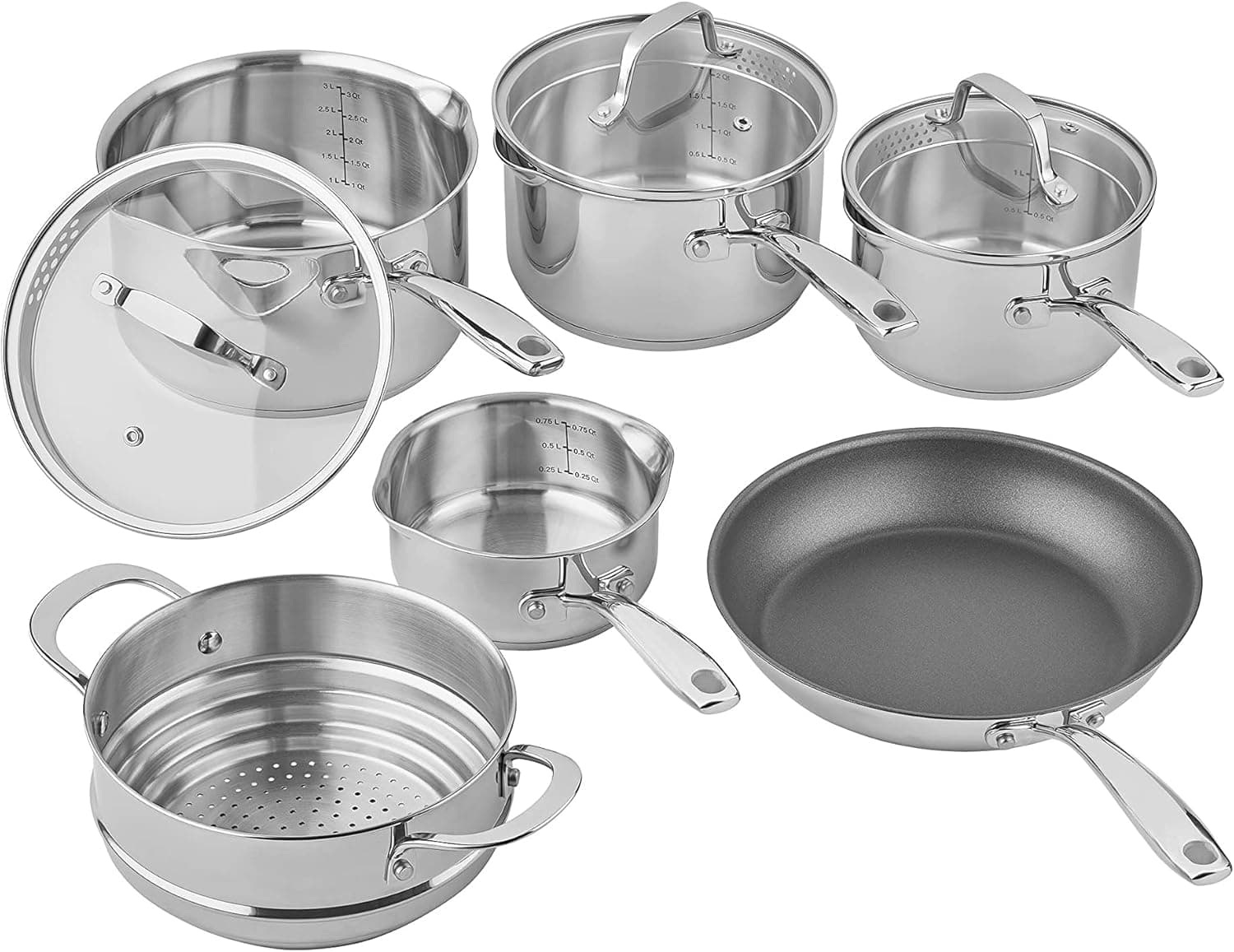
- Tri‑ply hybrid set (stainless steel core + nonstick interior) – a compromise that gives you solid heat control with a nonstick surface.
- Budget‑friendly 3‑piece starter set (one stainless, two nonstick) – perfect for small kitchens or first‑time cooks.
- Professional‑grade commercial stainless set – for serious cooks who value durability above all else and are willing to maintain the pans.
What to look for
1. Construction layers (tri‑ply, 5‑ply, or single‑wall)
The number of metal layers determines heat spread and warping resistance. A tri‑ply (stainless‑steel core sandwiched between aluminum) offers good conductivity while staying induction‑ready. Five‑ply adds durability but also weight and cost. Single‑wall stainless can develop hot spots; single‑wall nonstick usually means thinner aluminum that bends easily.
2. Material thickness and gauge
Heavy‑duty stainless steel shows up as 16‑18 gauge (≈2 mm). Thicker pans retain heat longer, reducing burner adjustments. Nonstick pans are generally thinner; a hard‑anodized exterior signals chemically hardened aluminum, giving more rigidity than standard coated aluminum.
3. Type of nonstick coating
Ceramic‑based coatings are PTFE‑free and tolerate higher temperatures (up to 450 °F) before breaking down, but they lose slickness faster. Traditional PTFE coatings are extremely slick but should stay below 500 °F. Look for “scratch‑resistant” or “reinforced” claims and a warranty that covers peeling.
4. Compatibility with cooktops
Induction ranges require magnetic pans. Most stainless steel sets are induction‑ready; many nonstick sets are not unless they have an iron‑based base. Hybrid sets often include a stainless disc on the bottom, making them universally compatible.
5. Oven and broiler safety
Stainless steel typically handles 500 °F‑600 °F, allowing stovetop‑to‑oven transitions. Nonstick interiors usually cap at 400‑450 °F because the coating can discolor or off‑gas at higher heat.
6. Maintenance requirements
Stainless steel tolerates firm scrubbing and metal utensils; occasional polishing removes stains and rainbow‑colored heat tint. Nonstick surfaces demand soft sponges, no abrasive pads, and—unless labeled dishwasher‑safe—hand washing only.
7. Warranty and service support
A three‑year limited warranty on stainless sets and a comparable “no‑peel” guarantee on nonstick coatings signal confidence in durability. Companies that replace rather than repair worn coatings extend a set’s useful life.
Our picks
A heavy‑gauge stainless steel set for high‑heat searing
If you love browning steaks, deglazing sauces, or moving a pan from stovetop to oven, a heavy‑gauge stainless steel set is the workhorse you need. Look for tri‑ply construction with a 16‑18 gauge cooking surface and an aluminum or copper core for even heat. The pans develop a natural, slightly darker “patina” over time that helps resist sticking when pre‑heated correctly. The trade‑off is weight and price, but they rarely warp and can last a lifetime.
Shop this type: Check price on Amazon →
A premium hard‑anodized nonstick set for low‑fat everyday cooking
For families that prioritize quick cleanup and minimal oil, a hard‑anodized nonstick set is solid. The anodization hardens the aluminum, adding durability while keeping the pans lightweight. Pair that with a reinforced PTFE coating that tolerates up to 450 °F for sautéing, stir‑frying, and egg cooking. Expect effortless food release and dishwasher‑safe convenience (if the coating’s label permits). The downside is inevitable coating wear, especially with metal utensils or high heat, so replacement every few years is normal.
Shop this type: Check price on Amazon →
A tri‑ply hybrid set with stainless steel core and nonstick interior
Hybrid sets give you a stainless steel exterior for induction and oven use, plus a nonstick interior for easy releases. Look for a tri‑ply core—stainless sandwiched between aluminum—to ensure even heat, and a reinforced ceramic‑based or PTFE coating on the cooking surface. Mid‑range in price and weight, they suit cooks who need both searing power and low‑fat convenience. Expect the nonstick side to wear sooner than pure stainless, but the outer shell protects the pan from warping.
Shop this type: Check price on Amazon →
A budget‑friendly starter set: one stainless skillet, two nonstick pans
If you’re outfitting a first apartment or modest kitchen, a starter trio covers most basics without breaking the bank. Choose a single stainless skillet (≈12 oz) for sautéing and a pair of nonstick 8‑inch pans for eggs and light sauces. Aim for at least 14‑16 gauge on the stainless piece; the nonstick pans should be hard‑anodized to avoid flimsy aluminum. This mix gives you steel durability for one pan while preserving the ease of nonstick for quick meals. The compromise is a mixed look and two cleaning routines.
Shop this type: Check price on Amazon →
A professional‑grade commercial stainless set for serious cooks
Commercial‑grade stainless sets feature 5‑ply construction, copper or aluminum cores, and reinforced riveted handles that stay cool. They withstand daily high‑heat work, frequent oven transitions, and occasional drops. Weight and cost are higher, so they suit cooks who use the pans regularly and accept a bit of extra maintenance (e.g., polishing the exterior). The durability is practically unmatched.
Shop this type: Check price on Amazon →
How to choose
Match the cookware’s primary job to your cooking style. Stir‑fries, quick breakfasts, and low‑fat meals pair well with nonstick sets; browning meat, making pan sauces, or stovetop‑to‑oven dishes favor stainless steel. Check your stove type—induction users need magnetic stainless or hybrid sets; gas and electric burners are more forgiving. Consider upkeep: stainless tolerates metal tools and firm scrubbing; nonstick requires soft sponges and silicone utensils.
Budget also matters. A quality stainless set costs more up front but may outlive several nonstick replacements, saving money long‑term. Conversely, a modest hard‑anodized nonstick set offers immediate convenience at a lower price, with the expectation of periodic replacement. Finally, read warranty details—three‑year coverage on steel and a “no‑peel” guarantee on nonstick signal confidence in durability. Align your cooking needs, stove compatibility, maintenance tolerance, and budget to land on the cookware that stays functional and attractive for years.
FAQ
How long can stainless steel cookware really last?
With proper care—avoid overheating, clean with non‑abrasive tools, and periodically polish—the stainless steel body can last decades, often outliving the average kitchen’s lifespan.
Will nonstick pans warp if I use high heat?
Most nonstick pans have thin aluminum cores that can warp under prolonged high heat. Stick to medium or low settings and avoid pre‑heating an empty pan to keep the surface flat.
Can I use metal utensils on stainless steel pans?
Yes, stainless steel tolerates metal utensils without scratching, though overly aggressive scraping can dull the surface.
Are ceramic nonstick coatings safer than PTFE?
Ceramic coatings are PTFE‑free and contain no PFOA, which some consumers prefer. However, they tend to lose slickness faster than high‑quality PTFE coatings.
Do I need to season a stainless steel pan?
Seasoning isn’t required, but pre‑heating the pan and adding a thin oil layer before the first cook creates a natural nonstick surface that improves over time.
Is a hybrid set worth the extra cost?
If you want the oven and induction versatility of stainless steel combined with the ease of nonstick, a hybrid set offers a balanced solution. Expect the nonstick side to need replacement sooner than the stainless exterior.
How do I know if my cookware is induction‑ready?
Place a magnet on the pan’s bottom—if it sticks firmly, the pan works on induction. Many product listings also label “induction compatible.”
Bottom line
Stainless steel earns its reputation for durability through rugged construction, high‑heat tolerance, and a lifespan that can span generations when cared for. Nonstick excels at convenience and low‑fat cooking but typically requires replacement every few years as the coating wears. Your choice should hinge on how you cook, the type of stove you own, and how much upkeep you’re comfortable with. By focusing on construction layers, material thickness, coating quality, and warranty support, you can select a set—whether all‑steel, all‑nonstick, or hybrid—that delivers the durability you need while fitting your kitchen routine. Happy cooking, and may your pans stay reliable for years to come!
%3Amax_bytes(150000)%3Astrip_icc()%2Ffaw-plastic-cutting-boards-test-gorilla-grip-sarah-felbin-3_crop-6b78f46f1d8b471cb2f9b47ec8ab5fa4.jpeg&w=3840&q=75)