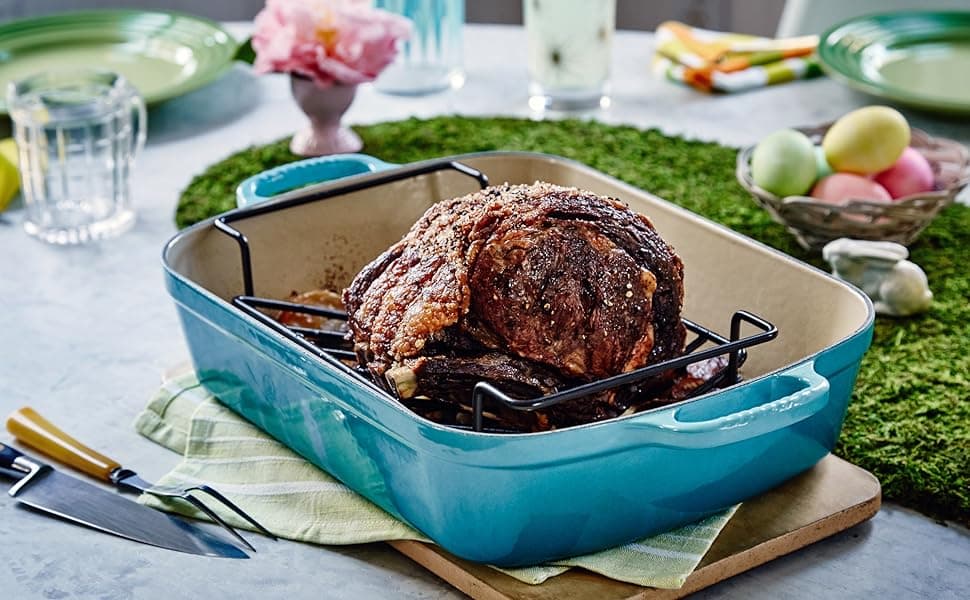
Enameled Cast Iron vs Stainless Steel Roasting: Which Material Wins for Lifetime Cooking
If your roasts come out uneven, dry, or you’ve already replaced several cheap pans, the problem is often the cookware, not the recipe. Choosing the right roaster can turn a sloppy dinner into a reliably juicy, perfectly browned centerpiece and spare you from a cycle of buying, discarding, and re‑buying. This guide shows how enameled cast iron and stainless steel differ in heat behavior, maintenance, and kitchen footprint, so you can pick the piece that truly lasts.
Quick picks
- Heavy‑duty enameled Dutch oven – Ideal for low‑and‑slow roasts, braising, and indoor‑to‑outdoor cooking. Its lid doubles as a serving dish, but the weight demands sturdy storage.
- Stainless steel roasting pan with rack – Best for high‑heat, crisp‑skin poultry and easy deglazing. The rack lifts meat for even airflow and drip‑away fat.
- Compact enameled skillet – Perfect for small families or limited countertop space; offers cast‑iron heat retention in a slimmer profile.
- Versatile stainless steel roasting set – A multi‑piece system that grows with your skill level, featuring interchangeable lids and optional silicone‑coated racks.
What to look for
1. Heat retention vs. heat conductivity
Enameled cast iron stores heat like a thermal battery. Once hot, it stays hot, delivering uniform cooking for large roasts. Stainless steel with an aluminum or copper core reacts quickly, allowing rapid browning without overcooking the interior. Test the weight: cast iron feels solid; stainless feels lighter but often has a "sandwich" construction.
2. Interior coating durability
Enamel creates a glass‑like barrier that prevents rust and eliminates seasoning. Choose a smooth, chip‑free finish; any crazing invites moisture to the iron core. Stainless interiors are polished or brushed and naturally non‑reactive, but inspect weld lines that could trap food.
3. Cooktop and oven compatibility
Both are oven‑safe, but limits differ. Enameled cast iron tolerates 500 °F (260 °C) and higher but should avoid direct open‑flame exposure. Stainless steel works on induction, gas, electric, and ceramic; verify the "induction‑ready" marking for magnetic compatibility.
4. Cleaning and maintenance habits
Enamel is non‑porous—soak and scrub with a non‑abrasive pad. Avoid steel wool that can scratch the glaze. Stainless tolerates a little elbow grease; a paste of baking soda and water or a dedicated stainless cleaner restores shine. Hand‑washing prolongs life, though many enamel pieces claim dishwasher safety (repeated cycles may dull the glaze).
5. Size, shape, and storage considerations
A 6–8 qt Dutch oven dominates a cabinet, while a 12‑inch stainless roasting pan nests flat. Some enamel lids double as serving dishes, adding bulk. Stainless sets often include collapsible racks or removable handles to make stacking easier.
Our picks
Heavy‑duty enameled Dutch oven for low‑and‑slow roasts
Perfect for whole pork shoulders, holiday turkeys, or any cut that benefits from steady, moist heat. Look for at least 2 inches of cast‑iron mass and a chip‑free enamel interior. A tight‑sealing lid traps steam; vent holes let you finish with a crisp crust.
Buyer profile: Home cooks who roast big cuts a few times a month and want a single pan that goes from stovetop to table.
Trade‑offs: Very heavy, requires ample cabinet space, and enamel can chip if it bangs against other cookware.
Shop this type: Check price on Amazon →
Stainless steel roasting pan with a rack for high‑heat browning
Delivers a golden, crackling skin on chicken, duck, or prime rib. Choose 18/10 stainless with an aluminum core (tri‑ply) for even heat. A stay‑cool handle and low profile rim ease movement in and out of the oven.
Buyer profile: Cooks who love quick, high‑heat roasts and enjoy deglazing for pan sauces. Works on induction cooktops.
Trade‑offs: Heat dissipates faster than cast iron, so you may need to baste or cover the roast shortly after removal. Rainbowing (cosmetic discoloration) can appear after many high‑heat cycles.
Shop this type: Check price on Amazon →
Compact enameled skillet for small roasts and everyday meals
A 10‑inch enameled skillet offers cast‑iron heat retention in a slimmer silhouette that fits crowded cabinets. Look for a single‑layer enamel labeled "no reactive coating" to avoid metallic flavors.
Buyer profile: Small‑family cooks, single professionals, or anyone needing a versatile piece that roasts, sautés, and bakes.
Trade‑offs: Limited capacity—won’t fit a 12‑lb roast. Edges heat quickly; a silicone handle cover is advisable.
Shop this type: Check price on Amazon →
Versatile stainless steel roasting set with interchangeable lids
A matched set (9‑inch, 12‑inch, and deep braising pan) shares a common lid, reducing clutter. Each pan should have a polished interior and a third‑layer core for balanced heat.
Buyer profile: Growing families, hobbyist experimenters, or anyone who values a cohesive look and stackable design.
Trade‑offs: Higher upfront cost; you may own a size you never use. Multi‑layer construction adds hidden weight.
Shop this type: Check price on Amazon →
How to choose
- Match cooking style to heat behavior – Slow, moisture‑rich roasts favor enameled cast iron; quick, high‑heat finishes favor stainless steel.
- Assess kitchen real estate – Large Dutch ovens need floor space; stackable stainless sets save room.
- Check cooktop compatibility – Induction users should select magnetic stainless; gas or electric cooks can use either.
- Consider maintenance comfort – If you dislike scrubbing, enamel’s non‑stick surface wins; stainless tolerates more aggressive cleaning and dishwasher use.
- Balance budget and longevity – Enamel adds coating cost, but both materials can last decades when cared for. Evaluate upfront price against expected years of use.
By weighing heat profile, size, compatibility, and upkeep, you’ll land on a roaster that feels like an extension of your technique, not a compromise.
FAQ
How long does an enameled cast‑iron roaster last?
If you avoid chips, clean gently, and store it where it won’t be knocked, the enamel and underlying iron can survive 20 years or more, often outlasting the cookware itself.
Can I use stainless‑steel roasting pans on an induction cooktop?
Only if the pan is marked “induction‑ready,” meaning it contains a magnetic layer. A simple magnet test (the magnet should stick firmly) confirms compatibility.
Will the enamel affect the flavor of my meat?
No. Enamel is a non‑reactive, glass‑like coating that doesn’t leach metal, so the meat’s flavor stays pure.
Is it safe to put enamel‑coated cast iron under a broiler?
Generally safe up to the manufacturer’s limit (often 500 °F). Repeated direct broiler exposure can cause discoloration or micro‑cracks, so use the broiler sparingly.
How do I prevent stainless steel from developing rainbow discoloration?
Rainbowing is cosmetic and results from high heat. Preheat on medium rather than high and avoid sudden temperature changes. A gentle polish with stainless cleaner restores shine.
Which material is better for deglazing and making pan sauces?
Stainless steel wins because its thin walls release browned bits quickly, and its neutral surface adds no flavor interference.
Can I use the same roaster for both stovetop searing and oven roasting?
Yes. Both enameled cast iron and tri‑ply stainless pans are designed for stovetop‑to‑oven use. Verify the handle is oven‑safe (most are up to 500 °F) before transferring.
Bottom line
Both enameled cast iron and stainless steel bring lifetime durability to the roasting arena, but they excel in different scenarios. Choose cast iron when you need deep heat retention, a non‑reactive glaze, and a classic go‑from‑stove‑to‑table look. Opt for stainless steel when you crave rapid, high‑heat browning, easy deglazing, and universal cooktop compatibility. Align the material with your cooking habits, kitchen space, and cleaning preferences, and you’ll add a roasting tool that lasts for years while delivering the flavor and texture you expect. Happy roasting!