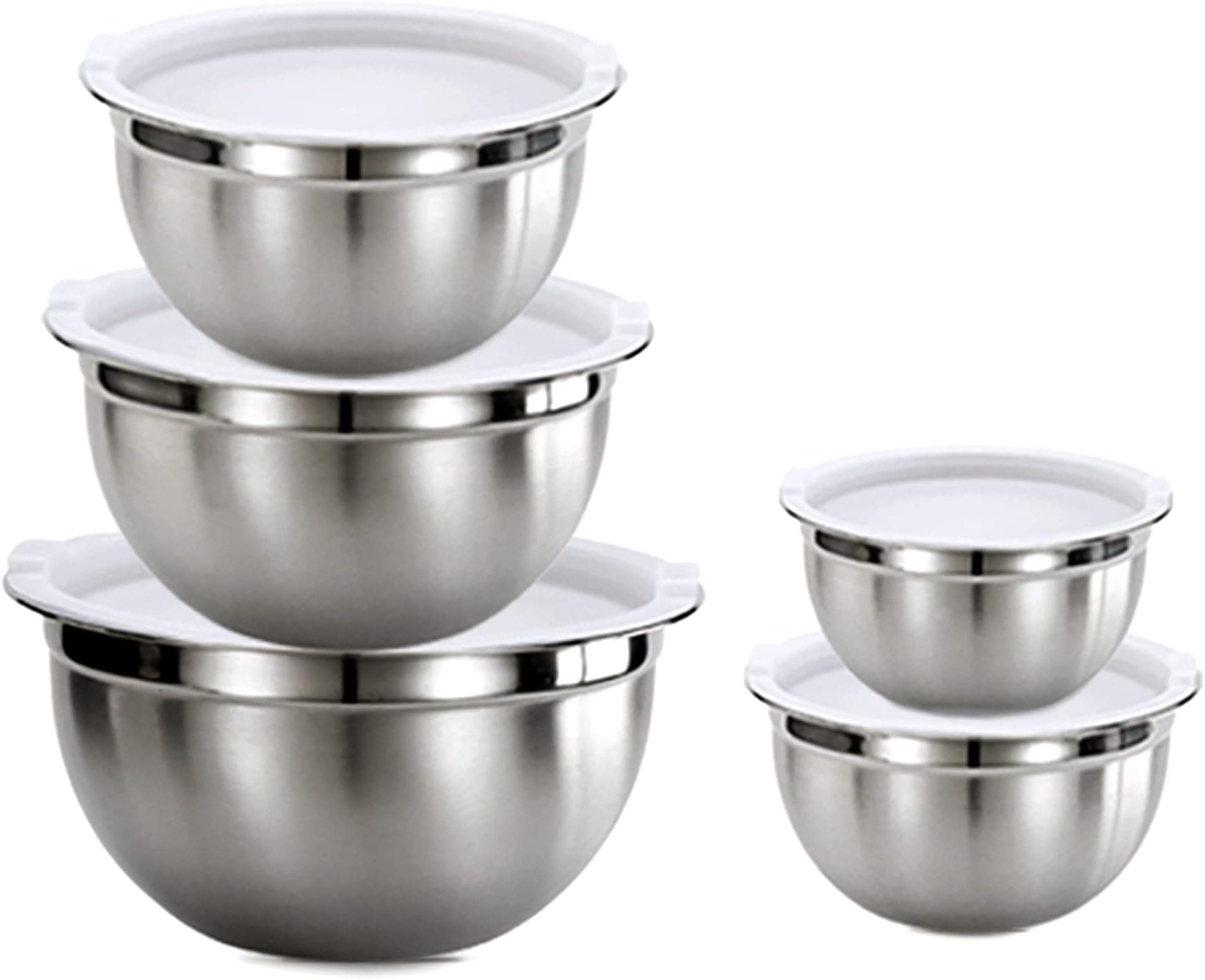
Best Heavy‑Duty Mixing Bowls for Bakers – Durable Picks That Last
When you knead dough, whisk butter, or fold batter for hours, the right bowl can mean the difference between smooth workflow and a messy disaster. Bakers who treat their kitchen like a workshop need bowls that won’t warp, dent, or stain after a few seasons. You need something sturdy enough for heavy dough, stable on the countertop, and easy to clean—ideally a set that lasts years, not months.
This guide explains the key features to assess, outlines the classic bowl types that survive the toughest sessions, and shows how to match a bowl to your kitchen size, baking style, and storage limits. By the end you’ll know which heavy‑duty mixing‑bowl family fits your needs and how to pick a set that feels like a lifelong investment.
Quick picks
- Heavy‑gauge stainless‑steel bowls with thick rims – Ideal for large batches, dough‑heavy recipes, and commercial‑style durability.
- Tempered glass bowls with non‑slip silicone bases – Great for visualizing batter consistency while offering shatter resistance.
- Multi‑material combo sets (stainless interior, silicone‑coated exterior) – Provide the strength of metal with a gentle grip for easy handling.
- Large‑capacity, short‑handled bowls for ergonomic stirring – Perfect for long periods of hand mixing.
- Compact, nesting bowls for small kitchens – Deliver durability without sacrificing counter space.
What to look for
1. Material thickness and construction
Gauge indicates longevity. Heavy‑gauge stainless steel (18‑20 gauge) resists dents and warping under dense dough. For glass, choose tempered or borosilicate, which handle thermal shock better than regular soda‑lime glass. Avoid ultra‑thin “budget” bowls—they bend, crack, or lose shape over time.
2. Rim design and stability
A thick, rolled‑over rim adds strength and prevents spills when whisking or using a hand mixer. Slightly flared bases sit more securely and reduce wobble. Some models include a silicone or rubber ring molded into the base for grip and surface protection.
3. Capacity versus ergonomics
Heavy dough often needs 6‑8 qt bowls; batter can be handled in 4‑qt vessels. Larger bowls should feature short, wide handles that give leverage without over‑reaching. If storage is limited, look for nesting sets, but verify that the larger bowls retain robust wall thickness.
4. Non‑reactive surface
Acidic ingredients (lemon, vinegar, tomato) can react with certain metals, imparting metallic flavor or discoloration. Stainless steel is naturally non‑reactive, but low‑grade alloys may still pose issues. Glass and silicone are inherently non‑reactive. If you choose a coated metal bowl, confirm the coating is food‑grade and dishwasher safe.
5. Cleaning and maintenance
Dishwasher‑safe bowls save time, but high‑heat cycles can accelerate wear on silicone edges or cloud some glass. Hand‑washing with mild detergent preserves the finish of most heavy‑duty bowls. Look for smooth interiors—ribbed surfaces trap batter and breed odor. A removable silicone base can be taken off for thorough cleaning, extending life.
6. Weight and balance
A sturdy bowl should feel solid but not overly heavy to move. Stainless steel bowls are heavier than glass, which can be an advantage with a power mixer—the weight keeps the bowl from sliding. Glass bowls are lighter, making them easier to lift when transferring batter, but they may need a non‑slip base for vigorous mixing.
7. Price versus lifetime value
Heavy‑duty bowls are an upfront investment. Instead of chasing the lowest price tag, compare cost per quart of capacity and expected lifespan. A well‑made stainless set can last a decade or more, effectively lowering the annual cost. Premium options don’t always provide proportional benefit over a solid mid‑range stainless set.
Our picks
Heavy‑Gauge Stainless‑Steel Bowls (6‑qt + 4‑qt)
These bowls deliver professional‑grade durability. The 18‑gauge steel resists dents even when pounding tough rye dough, and rolled‑over rims keep splatter under control. Short, wide handles give solid leverage, reducing wrist strain during long mixing sessions. Perfect for home bakers who regularly make large batches of bread, pizza dough, or cookie dough, and who need a bowl that can double as a prep surface.
Shop this type: Check price on Amazon →
Tempered Glass Bowls with Silicone Base (5‑qt + 3‑qt)
A clear tempered glass bowl lets you watch batter transition from stiff to silky. The glass is non‑reactive, so citrus or acidic mixes won’t affect flavor. A silicone ring molded into the base prevents sliding, and the bowl’s weight stabilizes it during high‑speed hand mixing. These bowls are oven‑safe to moderate temperatures, allowing you to melt chocolate or warm sauce directly before mixing.
Shop this type: Check price on Amazon →
Dual‑Material Combo Bowls (Stainless Interior, Silicone‑Coated Exterior, 4‑qt)
Combo bowls combine a stainless‑steel interior with a silicone‑coated exterior. The interior handles heavy dough without warping, while the silicone exterior protects countertops and makes the bowl easy to lift, even when full. The coating also dampens vibrations—useful with a stand‑mixer’s high‑speed setting. Ideal for medium‑size kitchens where storage is at a premium; the silicone layer adds protection against scratches and dents.
Shop this type: Check price on Amazon →
How to choose
Match the bowl’s capacity to the scale of your most frequent recipes. If you bake week‑night loaves and batch cookies, a 6‑qt stainless set covers most needs. For frequent batter work—cakes, pancakes, frosting—a 4‑qt tempered glass bowl lets you monitor consistency without lifting a heavy metal vessel.
Next, consider kitchen ergonomics. A heavy stainless bowl sits stable on a marble countertop, but on lightweight laminate a silicone‑coated base or ring will prevent slipping. Think about storage: nesting sets save space, but ensure the larger bowl’s walls stay thick enough to resist warping.
Finally, weigh cleaning preferences. If you load bowls into the dishwasher nightly, pick a stainless or silicone‑coated bowl that’s explicitly dishwasher‑safe. If you prefer hand‑washing, tempered glass offers a smooth, stain‑resistant surface. Align capacity, material, ergonomics, and cleaning habits, and you’ll land on a heavy‑duty bowl that feels like a natural extension of your hands—and one that will stay functional for years.
FAQ
What makes a mixing bowl “heavy duty”?
A heavy‑duty bowl combines thick, durable material (like 18‑gauge stainless steel or tempered glass) with reinforced rims, a stable base, and a non‑reactive interior. These features resist denting, warping, and staining under dense dough or prolonged high‑speed mixing.
Can I use a glass mixing bowl on the stove?
Tempered glass bowls are safe for gentle warming, such as melting chocolate in a double‑boiler. They should not be placed directly on an open flame or high heat source, as rapid temperature changes can cause cracking.
Are stainless‑steel bowls dishwasher safe?
Most heavy‑gauge stainless‑steel bowls are dishwasher safe, but repeated high‑heat cycles can produce water spots or dull the finish. Hand‑washing with a soft sponge and mild detergent preserves the shine longer.
How do I prevent bowls from developing odors?
Choose non‑reactive, smooth‑finished bowls (stainless steel, glass, or silicone‑coated). Rinse promptly after mixing and wash with hot, soapy water. For stubborn smells, soak in a solution of one part vinegar to three parts water.
What size bowl should I buy for sourdough starters?
A 5‑ to 6‑qt bowl provides enough room for the starter to expand during feeds while still allowing comfortable stirring. A wide mouth eases feeding and cleaning.
Do silicone‑coated bowls affect the taste of my batter?
No. Food‑grade silicone is inert and does not leach flavors or react with acidic ingredients. It simply provides a soft exterior for grip and protection.
Is it worth buying a set or a single bowl?
If you regularly switch between dough, batter, and sauce, a set offers flexibility and ensures you always have the right size. If storage is tight or you need only one specific capacity, a single bowl can be more economical.
Bottom line
Heavy‑duty mixing bowls are the workhorses of any baker’s kitchen. Focus on material thickness, rim stability, ergonomic handles, and a non‑reactive interior to choose a bowl that handles tough doughs, shows batter progress clearly, and survives years of daily use. Whether you opt for a rugged stainless‑steel set, a clear tempered‑glass option with a silicone base, or a hybrid stainless‑silicone combo, the right bowl makes mixing smoother, cleaner, and more enjoyable—turning every bake into a long‑lasting success.