Rubber versus Foam Kitchen Mat Slip Resistance: Which Keeps You Safe?
You’ve just sliced a tomato and the floor is slick with juice. One misstep and you’re on the tile with a cut. The right kitchen mat can turn that danger into a firm, comfortable stance. This guide breaks down slip‑resistance science, compares rubber and foam performance, and lists the features that matter for a safe, long‑lasting mat.
Quick picks
- Heavy‑duty rubber‑backed mat – best for high‑traffic kitchens, long standing periods, or slick shoes.
- Soft, high‑density foam mat – ideal for casual cooks who prioritize foot comfort and need a lightweight option.
- Dual‑layer (foam‑top, rubber‑base) mat – balances cushion and grip for mixed‑use spaces.
- Textured anti‑fatigue rubber tiles – perfect for replaceable modular setups or uneven flooring.
- Water‑resistant foam mats with raised edges – great for quick‑clean kitchen islands or prep stations.
What to look for
1️⃣ Material composition & slip‑grade rating
Rubber mats are natural rubber, synthetic poly‑butadiene, or blends. Look for an ASTM F890 or EN 14845 rating. Foam mats (EVA or PU) should list a COF ≥ 0.5 on smooth tile.
2️⃣ Thickness & density
A ¼‑inch (6 mm) rubber sheet feels firm without being spongy. A ½‑inch (12 mm) high‑density foam cushions but can compress over time. Aim for 3 lb/ft³ density in foam or 30‑durometer hardness for rubber.
3️⃣ Surface texture & pattern
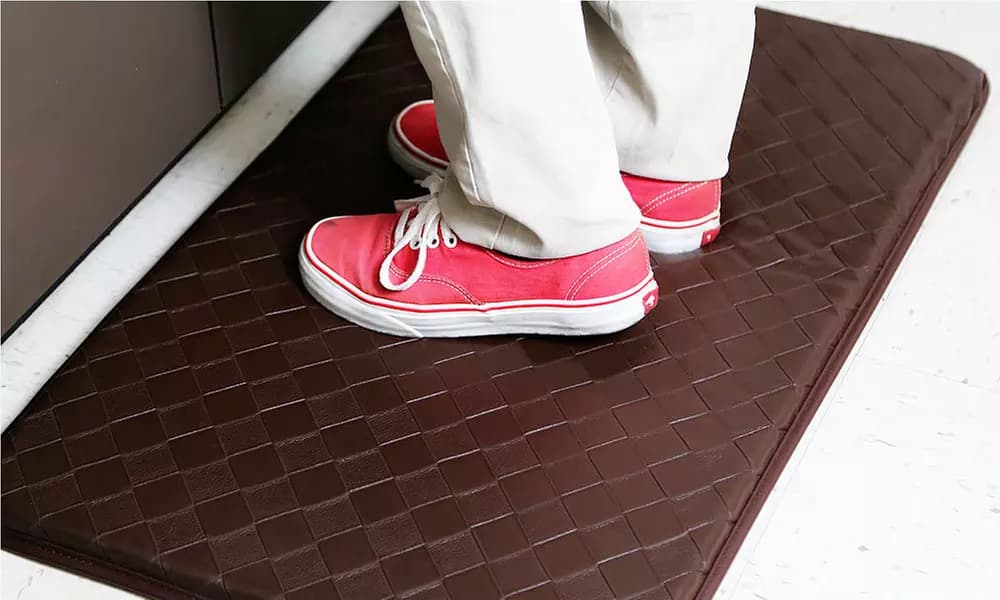
Cross‑hatch or diamond ribbing on rubber creates bite points for wet floors. Foam relies on micro‑textured embossing; avoid overly smooth surfaces that become slick when wet.
4️⃣ Edge design & anti‑slip backing
Beveled or sealed edges prevent tripping. Rubber often includes a silicone/latex grip layer; foam may use micro‑suction or a rubberized strip along the border.
5️⃣ Maintenance, odor & durability
Rubber resists oil, heat and stains; low‑quality rubber may emit a temporary “new‑rubber” odor. Foam wipes clean easily but cheap EVA can become tacky. Choose water‑proof, stain‑resistant options that roll or fold for storage.
6️⃣ Weight & stability on uneven floors
Heavy rubber stays put on polished tiles. Thin foam can shift underfoot. For uneven or sloped floors, select modular rubber tiles or a foam mat with reinforced backing.
7️⃣ Eco‑friendliness & recyclability
Natural rubber is renewable; look for FSC or GreenGuard certification. EVA foam can be recycled, but many low‑grade versions cannot. Prioritize recyclable materials for long‑term waste reduction.
Our picks
1️⃣ Heavy‑duty rubber‑backed mat for high‑traffic kitchens
A 30‑durometer, ¼‑inch thick rubber sheet with cross‑hatch pattern offers a steady grip on tile, wood, or laminate. The backing adheres without adhesives, allowing easy lifting for cleaning.
Ideal buyer: Professional‑level home chefs, families with active kids, or anyone wearing slick, rubber‑soled shoes.
Trade‑off: Heavier and pricier than foam; firm surface offers less cushioning for marathon cooking sessions.
Shop this type: Check price on Amazon →
2️⃣ Soft, high‑density foam mat for comfort‑focused cooks
A ½‑inch high‑density EVA mat cushions tired feet while maintaining a respectable slip rating (COF ≈ 0.5). Look for micro‑embossed surface and a thin rubberized grip strip on the edges. Rolls up for storage under a cabinet.
Ideal buyer: Casual cooks, retirees, or anyone needing a lightweight, portable mat.
Trade‑off: Foam compresses over time and absorbs spills, requiring prompt cleaning.
Shop this type: Check price on Amazon →
3️⃣ Dual‑layer mat (foam top, rubber base) for balanced performance
A ¼‑inch foam layer over a ⅛‑inch rubber anti‑slip base delivers cushion without sacrificing stability. Raised beveled edges keep the mat from sliding off counters.
Ideal buyer: Home chefs who want comfort without losing grip, or households with mixed flooring (tile front, wood back).
Trade‑off: Slightly bulkier; higher price than single‑material options.
Shop this type: Check price on Amazon →
4️⃣ Textured anti‑fatigue rubber tiles for modular flexibility
Interlocking 1 ft × 1 ft tiles with textured tread let you build a custom‑sized mat around sinks or appliances. Recycled rubber tiles typically have 30‑durometer hardness and replaceable units.
Ideal buyer: DIY‑enthusiasts or anyone with an irregular floor plan.
Trade‑off: Installation takes longer; seams can trap crumbs if not cleaned regularly.
Shop this type: Check price on Amazon →
5️⃣ Water‑resistant foam mat with raised edges for island workstations
A foam core coated with water‑resistant polyurethane and a 2‑inch raised lip creates a spill barrier while offering a comfortable standing surface.
Ideal buyer: Users who prep on a kitchen island and have limited floor‑cleaning equipment.
Trade‑off: Raised edge can become a tripping hazard in high‑traffic zones; best kept in a dedicated prep area.
Shop this type: Check price on Amazon →
How to choose
- Rank your priorities – Slip resistance above all? Choose a thick rubber mat with an ASTM rating. Prioritize foot comfort? Opt for high‑density foam or a dual‑layer design.
- Measure the workspace – A single sheet fits rectangular counters; interlocking tiles or modular pieces suit irregular sinks, islands, or under‑cabinet spaces.
- Consider your footwear – Smooth‑soled shoes benefit from rubber’s grip; hard‑soled shoes may feel “soft” on foam, reducing friction.
- Assess maintenance & lifespan – Rubber tolerates hot pans, oil splatter and repeated mopping; foam needs gentle wiping and may need replacement sooner.
- Weigh sustainability – Look for FSC‑certified natural rubber or recycled‑rubber tiles; recyclable EVA foam is an alternative.
Match these factors to your budget and aesthetic, and you’ll land on a mat that stays safe, comfortable, and functional for years.
FAQ
What makes a rubber kitchen mat more slip‑resistant than foam?
Rubber’s elasticity creates numerous micro‑contact points, especially with ribbed patterns, maintaining a higher coefficient of friction when wet. Foam can become slick as its surface compresses or absorbs moisture.
Can I place a foam mat on a wet kitchen floor without slipping?
A high‑density foam mat with textured surface and rubberized grip strip performs adequately, but it won’t match the stability of a dedicated rubber mat. For frequently wet floors, choose rubber or a dual‑layer mat with a rubber base.
How often should I replace my kitchen mat?
Durable rubber mats last 5‑10 years with regular cleaning. High‑density foam typically needs replacement after 2‑4 years, depending on traffic and exposure to heat or oil.
Are rubber mats safe for hot pans?
Most commercial kitchen rubber tolerates temperatures up to 200 °F (93 °C). Direct contact with scorching pans can still damage the surface, so use trivets for extra protection.
Will a rubber mat damage my hardwood floor?
Quality rubber mats with a soft silicone or latex backing should not scratch hardwood. Test a small area first and choose a mat with a smooth underside if you’re concerned.
How do I clean a rubber vs. foam mat?
Rubber mats: mop with warm, soapy water and a soft cloth; they dry quickly. Foam mats: wipe with a damp cloth and mild detergent; avoid soaking, as excess water can degrade the foam.
Is there an eco‑friendly option for kitchen mats?
Yes. Look for natural rubber certified by FSC or recycled rubber from tires. Some EVA manufacturers offer recyclable or bio‑based foam, though availability varies.
Bottom line
Rubber delivers rock‑solid grip, heat resistance, and longevity—ideal for busy, high‑traffic kitchens. Foam offers superior comfort and portability, fitting occasional cooks or compact spaces. Dual‑layer mats or interlocking rubber tiles combine the best of both worlds. Align material, thickness, texture, and care requirements with your cooking habits, and you’ll select a mat that stays safe, comfortable, and truly “buy‑it‑for‑life.”