Foam Roller vs Massage Gun for Post‑Race Recovery: Which Tool Helps You Bounce Back Faster?
You’ve just crossed the finish line of a marathon, but tight calves and a sore lower back make tomorrow’s training feel impossible. The problem isn’t a lack of will—it’s lingering muscle tension that stalls recovery. A targeted recovery tool can restore blood flow, release fascia, and get you back on the road faster. This guide breaks down the science, the trade‑offs, and the specs you need to pick the right device—whether you need a portable solution for trail‑side recovery or a budget‑friendly option for the home gym.
Quick picks
- Compact percussion device for on‑the‑go relief – Ideal for runners who travel frequently or need spot treatment on the trail.
- Standard‑density foam roller for full‑body myofascial work – Great for budget‑conscious athletes who want a versatile, low‑maintenance tool.
- Adjustable‑density roller for customizable pressure – Perfect if you have a mix of sensitive and tight muscle groups.
- Hybrid set (foam roller + mini‑gun) – Suits runners who want the broad coverage of a roller plus the pinpoint power of a gun.
What to look for
1. Pressure & Intensity Control
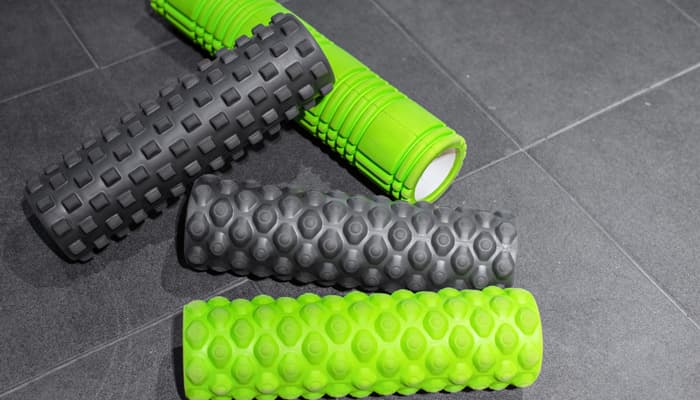
Foam rollers rely on your body weight. A soft, low‑density roller offers gentle massage; a firm, high‑density cylinder provides deeper compression. Choose a roller that lets you vary intensity by shifting position (e.g., placing a yoga block under your hips).
Massage guns deliver adjustable percussive force measured in impact amplitude (mm of travel) and stroke frequency (pulses per minute). Models with selectable amplitude let you match force to muscle group and pain tolerance.
2. Speed & Frequency Settings
Rollers have no built‑in speed; the rhythm comes from how fast you roll. For a massage gun, look for multiple pulse‑rate options—commonly 1,800–3,200 pulses per minute. Lower rates aid warm‑up and circulation; higher rates target deep‑tissue knots after a race.
3. Size, Weight, & Portability
Foam rollers range from 12‑inch travel cylinders (fits in a hydration pack) to 36‑inch, 4‑pound professional models. Pick a length that matches your typical use environment.
Massage guns vary from 1‑pound pistol‑style units (easy to clip to a race belt) to bulkier 2‑pound models. Battery life and charging time matter on the trail; a gun that lasts 3 hours at max setting offers real flexibility.
4. Attachment Variety & Surface Design
Rollers may be smooth, grid‑textured, ridged, or even vibrate. Textured surfaces create focal pressure points that mimic a therapist’s hands.
Guns typically include interchangeable heads: a large ball for big muscles, a flat disc for broad areas, a forked tip for the spine or piriformis, and a bullet for precise trigger points.
5. Noise Level & Comfort
A quiet roller is a given; a loud gun can be distracting in shared spaces. Look for “low‑noise motor technology” (often under 60 dB). ergonomic grips reduce hand fatigue during extended sessions.
6. Durability & Warranty
High‑density EVA or cross‑linked polyethylene rollers resist compression after hundreds of rolls. Reinforced cores add extra strength for heavy use.
Massage guns contain motors and batteries that wear out. Reputable brands offer a 1‑year motor warranty and a 90‑day return window.
7. Cost vs. Value
A 12‑inch foam roller can be under $20; premium multi‑density rollers sit at $50‑$80. Basic massage guns start around $70, while high‑end units exceed $400. Balance your race frequency, training load, and whether the device will serve a team.
Our picks
1. The All‑Round Travel Roller
A 12‑inch, high‑density cylinder that folds or telescopes for easy packing. Long enough for calves, hamstrings, and lower back, yet small enough for a hydration pack.
Who it suits: Ultra‑runners camping at trailheads, marathoners flying into race cities, and budget‑conscious athletes who want a maintenance‑free tool.
Trade‑offs: Shorter length means extra positioning time to cover an entire quad.
Shop this type: Check price on Amazon →
2. Adjustable‑Density Foam Roller Set
Dual‑core designs let you flip between a soft outer layer and a firm inner core, delivering gentle rolls for shins and deep pressure for glutes or IT band.
Who it suits: Runners with mixed tight‑and‑sensitive zones, or coaches needing one roller for a varied team.
Trade‑offs: Slightly heavier (2–3 lb) and pricier than a single‑density roller.
Shop this type: Check price on Amazon →
3. Compact Percussion Massage Gun
A pistol‑style, sub‑2‑pound gun with a detachable short‑stroke head. Look for three speed settings, a 3‑hour max runtime, and a motor under 60 dB.
Who it suits: Marathoners who need spot‑treatment for trigger points, ultra‑runners camping at altitude, and anyone who finds firm foam rollers uncomfortable.
Trade‑offs: Intense percussive action can be harsh on tender tissue; batteries require periodic charging.
Shop this type: Check price on Amazon →
4. Hybrid Recovery Kit (Roller + Mini‑Gun)
A 24‑inch medium‑density foam roller paired with a small handheld gun. The roller handles large‑muscle myofascial release; the gun targets knots in calves, forearms, or lower back.
Who it suits: Team coaches equipping groups, serious marathoners who want both broad and pinpoint therapy, and runners who like swapping tools without buying two high‑end products.
Trade‑offs: Higher price and need for storage space, but the combined benefits outweigh the cost for frequent racers.
Shop this type: Check price on Amazon →
How to choose
- Map usage scenarios. Home or hotel recovery? A 24‑inch roller or mid‑range gun with long battery life works. Remote trail races? Prioritize portability: a 12‑inch travel roller plus a lightweight gun that fits in a hydration pack.
- Assess pain tolerance and muscle density. Tight hips, IT‑band syndrome, or sore calves respond well to firm rollers or high‑amplitude guns. Sensitive calves benefit from soft rollers or low‑stroke gun settings.
- Balance budget against training frequency. Racing 2–3 times a year? A solid foam roller (<$30) covers most needs. Training weekly? Investing $150‑$200 in a mid‑range percussion gun can cut downtime and improve training quality.
Align usage, comfort, and price; the tool you actually use will be the one that consistently supports recovery.
FAQ
What’s the main physiological difference between foam rolling and percussion massage?
Foam rolling applies sustained compressive force that lengthens fascia and boosts circulation. A massage gun delivers rapid rhythmic pulses that stimulate muscle spindles and break up localized adhesions more quickly.
Can I use a massage gun on my joints or bones?
No. Percussive devices are intended for soft tissue only. Avoid bony prominences, the spine, and any area with acute inflammation or open wounds.
How long should I spend on each muscle after a race?
Aim for 30–60 seconds per muscle group with a roller, and 10–15 seconds per spot with a gun. Adjust based on comfort; longer isn’t always better.
Do I need both a roller and a gun?
Not necessarily. Choose the tool that matches your primary need—broad myofascial release (roller) or targeted trigger‑point work (gun). A hybrid kit offers flexibility but isn’t essential.
Will these tools replace a professional massage or physical therapist?
They’re excellent adjuncts for routine recovery but don’t substitute a trained therapist when dealing with serious injury or chronic pain.
How often can I safely use a massage gun after a race?
Most experts recommend 1‑2 sessions per day for the first 48 hours, limiting each session to 5‑10 minutes total. Listen to your body and avoid over‑treating sore spots.
Is there a risk of bruising or tissue damage?
With proper technique and appropriate intensity, the risk is low. Start on the lowest setting and increase only if the muscle tolerates it without excessive pain.
Bottom line
Foam rollers and percussion massage guns both accelerate post‑race recovery, but they excel in different scenarios. A roller offers low‑cost, low‑maintenance, whole‑body work—ideal for runners who want simple, large‑muscle coverage. A gun provides high‑intensity, spot‑specific pulses—perfect for athletes who need rapid knot relief and are comfortable with a higher price tag.
Match the tool to your training environment, race frequency, and pressure tolerance. Choose a travel‑size roller for trail adventures, an adjustable‑density roller for mixed‑need home gyms, a compact gun for on‑the‑go spot treatment, or a hybrid kit for the best of both worlds. Consistent post‑race self‑care will keep your muscles happy, mileage steady, and the next race within reach.
%3Amax_bytes(150000)%3Astrip_icc()%2Fshp-half-marathon-gear-sep-24-test-new-balance-womens-fuelcell-supercomp-elite-v4-jthompson-2057-8feab28f35ed42a7bbcfd364aae4bbd4.jpeg&w=3840&q=75)