Best Compression Socks for Marathon Recovery
You’ve just crossed the marathon finish line, but your calves feel like a brick wall, your shins throb, and swelling creeps up the lower leg. The problem isn’t a lack of training—it’s the post‑run inflammation that stalls your next workout. The right pair of compression socks can unclog blood flow, drain excess fluid, and shave days off your recovery timeline. This guide shows you how to choose the ideal recovery sock, breaks down the key specs you must compare, and lists our tested favorites for every runner type.
Quick picks
- Full‑leg, graduated compression (15‑20 mmHg) – Best for runners who need strongest circulatory support from ankle to knee.
- Mid‑calf, moderate compression (10‑15 mmHg) – Ideal for everyday recovery, travel, or post‑run wear without feeling overly tight.
- Toe‑less, high‑compression (20‑30 mmHg) – Targets calf and shin soreness while leaving the forefoot free.
- Thermal‑woven, low‑compression (5‑10 mmHg) – Keeps legs warm in cold climates while delivering mild compression.
What to look for
Compression level (mmHg)
Compression is measured in millimeters of mercury. For marathon recovery, most experts recommend graduated compression that peaks at the ankle and tapers toward the knee.
- 5‑10 mmHg – Light, suitable for mild swelling or comfort‑first use.
- 10‑15 mmHg – Moderate, works for daily post‑run wear and travel.
- 15‑20 mmHg – Strong, aimed at athletes with noticeable edema.
- 20‑30 mmHg – Very strong; usually for medical patients but useful for ultra‑runners with severe fatigue.
Length and coverage
- Full‑leg (knee‑high) – Covers calf, shin, and part of the knee; best for comprehensive support.
- Mid‑calf – Stops just above the ankle; easier to pull on, lighter for travel.
- Toe‑less – Leaves the front of the foot exposed; great for runners who need toe wiggle room or wear sandals after a run.
Fabric composition
Choose blends that balance elasticity, moisture‑wicking, and durability. Common fibers:
- Nylon/Spandex – Snug stretch, fast drying.
- Polyester/Elastane – Breathable, resists pilling.
- Merino wool blends – Natural odor control and warmth; perfect for cooler climates.
Avoid primary‑cotton constructions; cotton retains sweat and becomes heavy.
Seam construction
Seams become pressure points on tired muscles. Look for seamless toe loops or flat‑lock seams that run inside the cuff. If you have sensitive shins, prioritize a seamless design.
Fit and sizing
Compression socks must be snug but never choke circulation. Manufacturers base size on ankle circumference, calf girth, and shoe size. Measure the widest part of your calf and the circumference of your ankle, then match those numbers to the chart. When in doubt, size up for prolonged wear.
Additional features
- Anti‑slip grip on the cuff prevents rolling during runs or while traveling.
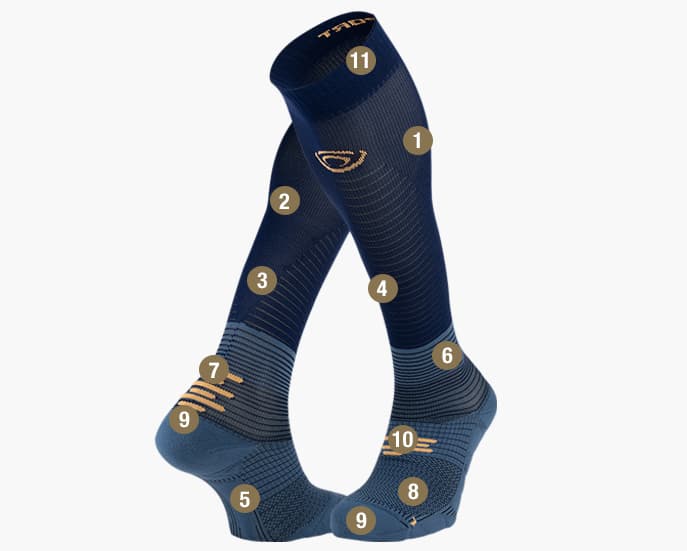
- Targeted compression zones (e.g., extra pressure over the gastrocnemius) help runners with localized soreness.
- UV‑protective treatment is a bonus for sun‑heavy training schedules.
Our picks
Full‑leg, graduated compression (15‑20 mmHg)
If you need the most comprehensive recovery aid, a knee‑high sock with a solid 15‑20 mmHg gradient is the gold standard. The length supports the shin and calf, flushing metabolic waste after a marathon.
Who it suits: Marathoners with noticeable swelling or calf tightness; anyone who wants a one‑stop post‑run solution.
Trade‑offs: Longer socks can be tricky to pull on when calves are sore. Choose a pair with a silicone cuff to stay in place without bunching.
Shop this type: Check price on Amazon →
Mid‑calf, moderate compression (10‑15 mmHg)
Mid‑calf socks strike a sweet spot between support and convenience. The 10‑15 mmHg range reduces swelling while staying comfortable for all‑day wear.
Who it suits: Athletes training six+ days a week who need quick post‑run recovery, and travelers fighting airplane‑induced edema.
Trade‑offs: They stop above the ankle, so shin compression is limited. Combine with calf‑targeted stretches if you suffer from shin splints.
Shop this type: Check price on Amazon →
Toe‑less, high‑compression (20‑30 mmHg)
When severe post‑marathon muscle damage demands aggressive compression, a toe‑less design can be a game‑changer. Open‑toe construction reduces forefoot pressure while delivering a strong “pump.”
Who it suits: Ultra‑marathoners, runners with chronic calf tightness, or anyone needing a high‑intensity boost after a grueling race.
Trade‑offs: The high pressure can feel restrictive; start with 30‑45 minutes and gradually increase as legs adapt.
Shop this type: Check price on Amazon →
Thermal‑woven, low‑compression (5‑10 mmHg)
For colder training sessions, a thermal‑woven sock that offers gentle compression keeps legs warm while encouraging blood flow. Merino wool blends add odor resistance and a cozy feel.
Who it suits: Runners in northern climates, early‑morning joggers, or anyone preferring milder compression for everyday wear.
Trade‑offs: Light compression won’t replace a higher‑mmHg sock for intensive recovery, but excels at comfort and warmth on low‑intensity days.
Shop this type: Check price on Amazon →
How to choose
- Assess your recovery needs. Swollen calves after every marathon? Go full‑leg, 15‑20 mmHg. Occasional soreness? Mid‑calf, 10‑15 mmHg.
- Measure correctly. Use a flexible tape to record ankle circumference and the widest part of your calf. Compare to the brand’s sizing chart; don’t rely on shoe size alone.
- Match the climate and activity. Cold weather? Choose thermal‑woven, low‑compression. Hot weather? Prioritize moisture‑wicking nylon/spandex blends with flat‑lock seams.
- Test the fit. If possible, try the socks in‑store. Wear them 15‑20 minutes; you should feel gentle pressure, not pins‑and‑needles. Numbness means the compression is too high.
- Check extra features. Anti‑slip cuffs, targeted zones, and UV protection can add value depending on your routine.
Following these steps lands you a pair that speeds recovery without sacrificing everyday comfort.
FAQ
What does “graduated compression” mean?
Graduated compression applies the highest pressure at the ankle and gradually eases toward the knee, encouraging blood to flow back toward the heart and reducing swelling.
Can I wear compression socks during a marathon?
Yes. Moderate‑compression (10‑15 mmHg) socks are common in races to improve circulation and reduce perceived fatigue. High‑compression (20‑30 mmHg) is usually saved for post‑run recovery.
How long should I wear recovery socks after a marathon?
Most runners benefit from 2–4 hours immediately post‑race, plus another 30‑60 minutes the next morning. Severe swelling may justify 6–8 hours or overnight wear, as long as the socks stay comfortable.
Are compression socks safe for everyone?
Generally safe for healthy adults. Those with peripheral vascular disease, diabetic neuropathy, or skin conditions should consult a medical professional before using high‑compression garments.
Do I need to wash my compression socks after every run?
Yes. Sweat and bacteria build up quickly. Hand‑wash in cool water with mild detergent or use a gentle machine cycle, then air‑dry. Avoid fabric softeners—they degrade elastic fibers.
Will a tighter sock always be better for recovery?
Not necessarily. Excessive pressure can restrict blood flow and cause numbness. Choose a compression level that feels supportive yet comfortable, and ensure a proper fit.
How do I prevent the socks from rolling down?
Look for socks with silicone or rubberized cuffs and anti‑slip grip on the interior. Proper sizing also reduces the tendency to tumble.
Bottom line
The best compression socks for marathon recovery are the ones that match your post‑run soreness, climate, and lifestyle. Full‑leg, 15‑20 mmHg socks give the most comprehensive support; mid‑calf, 10‑15 mmHg options provide a low‑profile, versatile solution. High‑compression, toe‑less styles serve ultra‑runners needing an aggressive “pump,” and thermal, low‑compression socks keep legs warm in cooler months. Measure correctly, start at a comfortable compression level, and let the gentle squeeze accelerate your bounce‑back. Happy running—and faster recovery!
%3Amax_bytes(150000)%3Astrip_icc()%2Fshp-half-marathon-gear-sep-24-test-new-balance-womens-fuelcell-supercomp-elite-v4-jthompson-2057-8feab28f35ed42a7bbcfd364aae4bbd4.jpeg&w=3840&q=75)