V60 Dripper vs Chemex Clarity Comparison – Which Pour‑Over Gives You the Cleanest Cup?
If your coffee looks cloudy and tastes muted despite following recipes, you’re not alone. The culprit is often the brewer’s ability to separate oils and fines. This guide breaks down the clarity debate between the V60 and Chemex, explains the variables you can control, and points you to the model that fits your taste, space, and routine.
Quick picks
- Bright, tea‑like cup for light roasts – thin‑walled, cone‑style dripper with a fine‑mesh filter.
- Fuller, chocolatey cup – thick‑walled, hourglass brewer with a bonded paper filter.
- Travel‑friendly, low‑maintenance – collapsible dripper that works with standard filters and fits in a backpack.
- Show‑off brewing station – large‑capacity hourglass brewer with stainless‑steel handle and graduated markings.
- Budget starter kit – simple ceramic cone dripper paired with a reusable metal filter.
What to look for
1. Filter material and thickness
- Paper filters (bonded Chemex papers) trap most oils, delivering a crisp cup.
- Metal or cloth filters let more oils through, adding body but also haze.
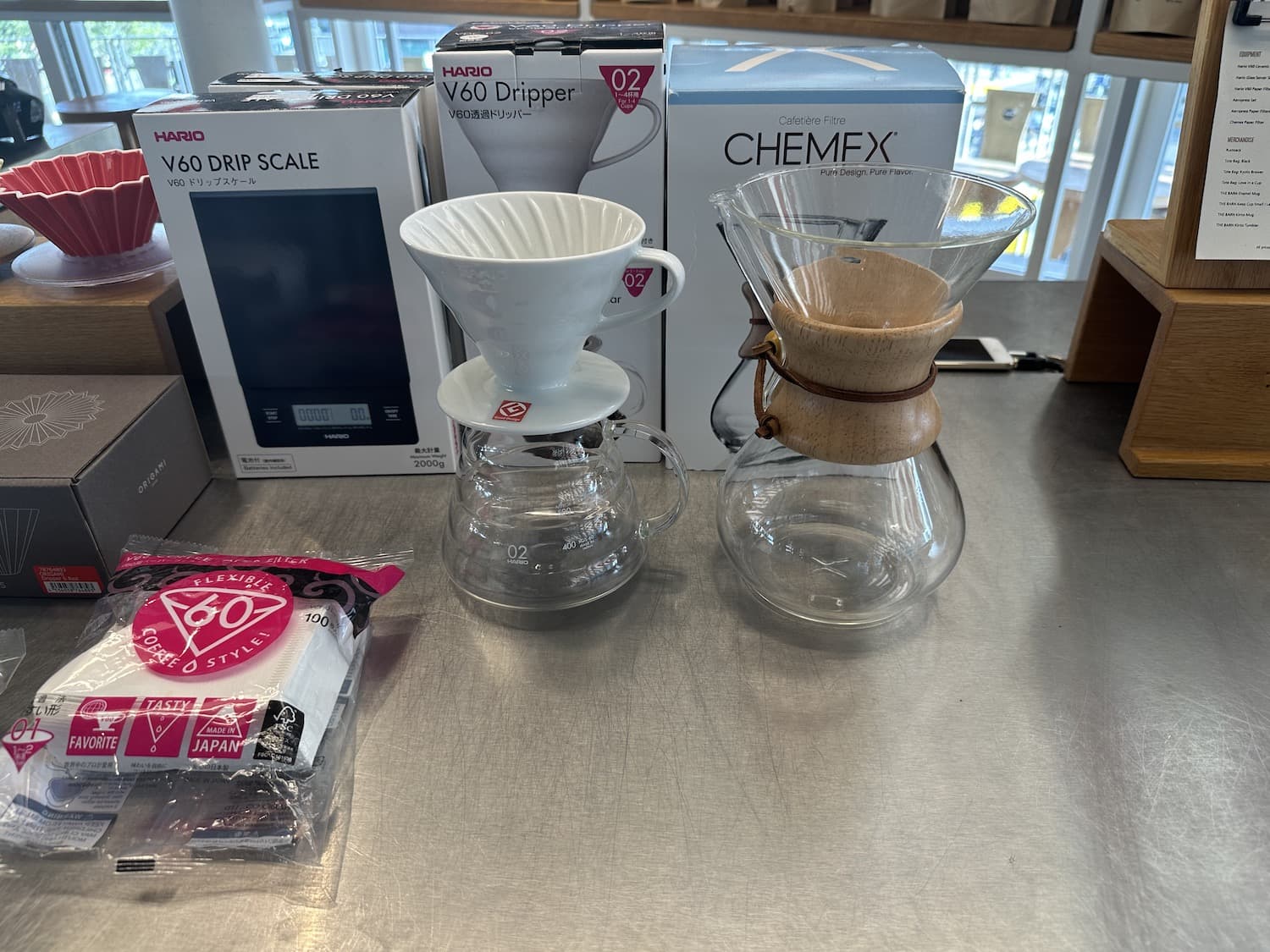
The V60 uses a thin, medium‑weight paper; the Chemex relies on a multi‑layer, thick paper. For absolute clarity, the Chemex filter has the edge, though it can over‑extract delicate aromatics if grind size or brew time are off.
2. Brewer wall thickness and shape
- Thin‑walled cones (ceramic or glass V60) cool the brew quickly, encouraging a fast draw‑down and fewer dissolved solids.
- Thick‑walled hourglass (Chemex) retains heat, giving water more time to extract flavors and a natural “filtering” effect that can improve clarity when paired with thick paper.
3. Grind size and distribution
- V60: medium‑fine grind (sea‑salt texture). Too fine causes channeling and a muddy cup.
- Chemex: slightly coarser grind (coarse sand). The thicker paper already slows flow; a finer grind risks over‑extraction and cloudiness.
4. Brew ratio and pour technique
- V60: controlled spiral pour, 1:15 coffee‑to‑water ratio.
- Chemex: 1:16–1:17 ratio with a “bloom‑pause‑bloom” method. Larger capacity dilutes sediment, aiding clarity.
5. Water temperature stability
Chemex retains heat, so start at ~200 °F and stay within 195‑205 °F. V60’s thin walls may require a hotter start or pre‑heating to avoid rapid cooling and under‑extraction.
6. Clean‑up and reuse considerations
- Paper‑only (Chemex) generates waste but needs minimal rinsing.
- Reusable metal filters (often with V60) save waste but require diligent cleaning; oil buildup can cloud future cups.
7. Aesthetic and ergonomics
A heavy, balanced Chemex reduces spill risk, while a lightweight V60 lets you position the kettle close to the coffee bed for precise pour control—both factors improve consistency.
Our picks
1. Classic high‑clarity hourglass brewer
Perfect for Ethiopian Yirgacheffe’s bright acidity, this thick‑walled, hourglass brewer with bonded paper filters delivers a crystal‑clear cup that highlights floral and citrus notes.
Best for: Light‑roast enthusiasts and countertop show‑offs.
Trade‑offs: Longer brew time, higher upfront cost, and a need for specific thick paper.
Shop this type: Check price on Amazon →
2. Nimble cone‑dripper balancing clarity and speed
A thin‑walled ceramic or glass cone dripper paired with a medium‑weight paper filter produces a crisp cup with a touch of body—ideal for Colombian Supremo.
Best for: Busy mornings and small kitchens.
Trade‑offs: Walls cool fast; pre‑heat the dripper or use hotter water.
Shop this type: Check price on Amazon →
3. Reusable‑filter combo for eco‑conscious clarity seekers
A cone dripper with a high‑grade stainless‑steel mesh filter captures most fines while letting natural oils pass, yielding a clean yet richer cup.
Best for: Sustainability‑focused brewers and frequent users.
Trade‑offs: Requires thorough cleaning after each brew; grind slightly coarser than paper.
Shop this type: Check price on Amazon →
4. Travel‑friendly collapsible dripper
Silicone collapsible cone dripper works with standard paper filters and a compact electric kettle, delivering a bright cup on the go.
Best for: Digital nomads, campers, and commuters.
Trade‑offs: Heat retention differs from ceramic; limited to a single 12‑oz serving.
Shop this type: Check price on Amazon →
How to choose
- Define clarity for you – bright and clean vs. slightly fuller. Thick‑paper Chemex = bright; cone dripper with fine paper or metal filter = balanced.
- Assess kitchen space and routine – hourglass brewers need a flat, stable surface; cone drippers fit tiny countertops or stovetop hacks.
- Consider heat retention – Chemex is forgiving; V60 demands hotter water or pre‑heating but rewards you with faster brews.
- Weigh sustainability and consumable cost – paper filters are cheap but wasteful; metal filters eliminate recurring purchases but need diligent cleaning.
By evaluating cup profile, space, temperature management, and environmental impact, you can pinpoint the brewer that delivers the clarity you crave without sacrificing convenience.
FAQ
What exactly does “clarity” refer to in coffee terminology?
Clarity describes how clean the cup looks and tastes, meaning minimal suspended fines and oils that can make the brew look cloudy or feel heavy on the palate.
Does the Chemex always produce a clearer cup than the V60?
Generally, Chemex’s thicker paper removes more oils and fines, resulting in a cleaner appearance. A well‑tuned V60 with the right grind and pour can achieve comparable clarity, especially with lighter roasts.
Can I use the same coffee grind for both brewers?
Not ideally. Chemex works best with a coarser grind (sand‑like) because its thick paper slows flow. V60 prefers a medium‑fine grind (sea‑salt texture) for optimal extraction speed and clarity.
How does water temperature affect clarity?
If water is too cool, extraction stalls, leaving suspended particles that make the cup look hazy. Too hot, and you risk over‑extraction, pulling excess oils that cloud both visual and flavor profiles. Staying within 195–205 °F is safe for both brewers.
Are metal filters a good compromise for clarity and sustainability?
High‑quality stainless‑steel filters capture most fines while allowing oils through, giving a cup clearer than cloth but richer than paper. They work well for eco‑conscious brewers, provided they’re cleaned regularly to avoid oil buildup.
Is a larger brew capacity better for clarity?
A larger vessel can dilute suspended particles, making the cup appear clearer. Chemex’s generous capacity often contributes to its clean look, but the key factor remains the filter’s ability to trap fines.
Do I need to pre‑heat the dripper for each brew?
Pre‑heating helps maintain water temperature throughout the pour. It’s especially beneficial for thin‑walled cone drippers like the V60, while Chemex’s thick glass retains heat well enough that pre‑heating is optional.
Bottom line
Both the V60 and Chemex excel at delivering a clear cup—just in different ways. Chemex’s thick paper and heat‑retentive glass produce a strikingly crisp brew, perfect for delicate roasts. V60’s agile, cone‑shaped design offers speed, portability, and fine‑tuned clarity through grind and pour technique. Choose the brewer that aligns with your taste, space, and sustainability goals, and you’ll enjoy a clean, vibrant cup every morning.

%3Amax_bytes(150000)%3Astrip_icc()%2Fsea-espresso-machines-test-breville-barista-express-impress-nsimpson-058-cacb044f2fef4b56a502cdc9bfdc7aa7.jpeg&w=3840&q=75)