French Press vs AeroPress for Cold Brew: Which One Wins Your Summer Sip?
Cold‑brew coffee promises a smooth, low‑acid cup, but many home brewers struggle with cloudy, weak results or waste‑ful batch sizes. If you already own a French press or an AeroPress, you’re likely asking which device can deliver a consistent, flavorful cold brew without extra gear or messy cleanup. This guide compares the two brewers for cold extraction, highlights the specs that matter, and recommends the best model for different routines. By the end you’ll know whether a French press, an AeroPress, or a hybrid solution fits your taste, space, and schedule.
Quick picks
- Large‑batch French press – Ideal for making a full‑pot (1‑liter +) of cold brew to keep in the fridge for a week.
- AeroPress with cold‑brew adapter – Perfect for experimenters who want a fast (12‑hour) brew and the ability to switch between hot and cold drinks.
- Dual‑purpose press (glass with fine mesh) – Works well for those who need clarity and want a single device for both hot pour‑over and cold brew.
- Travel‑size AeroPress‑style brewer – Best for commuters, campers, or anyone who needs a compact, spill‑proof cold‑brew solution on the go.
What to look for
Brew time & extraction control
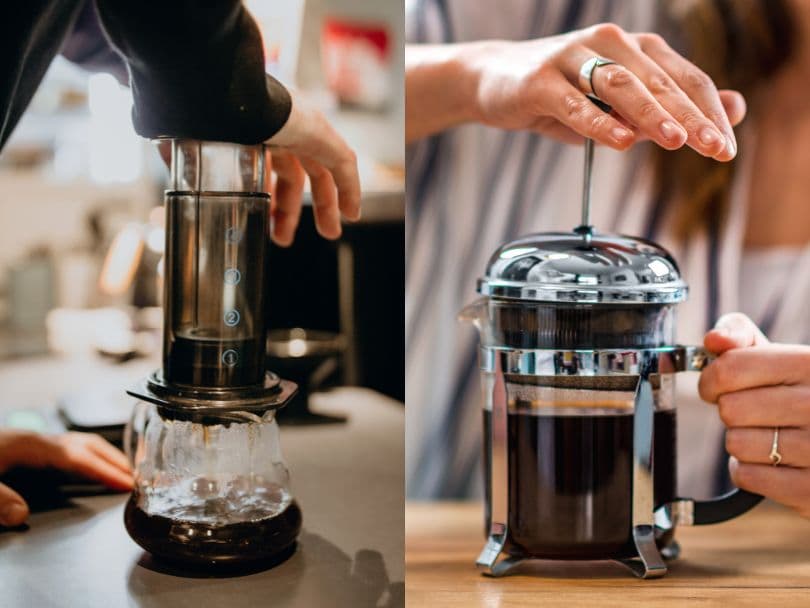
Cold brew relies on a long steep (8‑24 hours) rather than pressure or heat. A French press provides a static immersion environment; you set the timer and forget it. An AeroPress lets you adjust steep time and add a brief pressure push at the end, which can increase extraction efficiency. Look for an AeroPress model that includes a cold‑brew attachment (a longer‑sleeve plunger) to extend the steep without overflowing.
Filtration quality
Clarity matters because fine particles turn a silky cup gritty. French presses usually use a metal mesh filter that lets more micro‑fines through, giving a richer mouthfeel but occasional sediment. Newer French presses may add a double‑wall filter or a removable paper filter to improve clarity. AeroPress uses a paper or metal disc filter, yielding a cleaner cup; paper strips a tiny amount of coffee oils, affecting body. Choose metal for fuller‑bodied brew or paper for crystal‑clear cup.
Capacity & batch size
A 1‑liter French press produces 8‑10 cups in a single batch, minimizing daily chores. AeroPress chambers hold roughly 250 ml of water, so you’ll need several cycles or a larger AeroPress‑compatible cold‑brew bottle that fits the plunger. Size up on the French press for frequent guests; the AeroPress’s smaller volume suits single‑cup sipping.
Material & durability
Cold brew spends days in the fridge, so the brewer must resist odors and temperature swings. Stainless steel French presses are virtually odor‑proof and retain cold longer than glass. Borosilicate glass is neutral‑flavored but can develop a faint coffee film if not cleaned promptly. AeroPress bodies are high‑impact plastic—lightweight, unbreakable, but prone to staining if not rinsed thoroughly.
Ease of cleaning & maintenance
Cold brew leaves a layer of fine grounds, making cleanup a chore. French presses require you to disassemble the plunger, scrub the mesh, and rinse the carafe—a few minutes but straightforward. AeroPress cleaning is famously quick: after each brew, press the “puck” out, rinse the funnel, and pop the filter disc. If low‑maintenance is a priority, the AeroPress generally wins, especially with disposable paper filters.
Our picks
A full‑size stainless steel French press (large batch)
If you entertain friends, keep a ready‑to‑drink jug all week, or prefer a robust, full‑bodied cold brew, a stainless steel French press in the 1‑liter range is the sweet spot. Metal construction keeps coffee cold longer, and the sturdy mesh filter endures daily use. Expect slightly higher sediment, which many cold‑brew fans enjoy for added texture. Best for home kitchens with ample counter space and drinkers who tolerate a quick rinse after each batch.
Shop this type: Check price on Amazon →
A glass French press with a fine‑mesh double filter (clarity‑focused)
For those who love the classic look of a glass carafe and crave a clean, sediment‑free cup, choose a borosilicate glass French press with a dual‑layer metal mesh or optional paper filter insert. The fine mesh traps more particles, delivering a smoother mouthfeel while preserving coffee oils. Glass lets you watch the steeping process, a fun visual when experimenting with ratios. Suits small apartments where aesthetics matter as much as function.
Shop this type: Check price on Amazon →
AeroPress with a cold‑brew adapter (quick, experimental)
If you enjoy speedy experimentation—trying different beans, grind sizes, and steep times—the AeroPress equipped with a cold‑brew sleeve is ideal. Steep for 12‑20 hours, then press to separate grounds in seconds, delivering a smooth, low‑acid brew ready to drink immediately. Swapping between paper and metal filters lets you dial in the perfect balance of clarity and body. Perfect for home baristas who like to tinker and anyone who wants cold brew ready in under a day.
Shop this type: Check price on Amazon →
Travel‑size AeroPress‑style brewer (on‑the‑go)
For commuters, hikers, or anyone without a full kitchen, a compact, plastic AeroPress‑style unit that fits inside a travel mug is unbeatable. Add coarsely ground coffee, steep in cold water for several hours, then press directly into your bottle. The system is lightweight, dishwasher‑safe, and virtually unbreakable, perfect for camping trips or office desks where space is at a premium. Batch size is small (about 250 ml), but you can brew multiple bottles in succession for a week‑long supply.
Shop this type: Check price on Amazon →
How to choose
Start by answering three simple questions: How much coffee do you drink each week? How much counter space do you have? How much time are you willing to spend on cleanup?
- If you pour multiple cups daily and want a “set‑and‑forget” system, a large stainless‑steel French press wins on capacity and temperature stability.
- If you value a crystal‑clear cup and don’t mind a few extra rinses, the glass French press with a fine mesh gives visual appeal and cleaner flavor.
- For the experiment‑driven home barista who values speed and versatility, the AeroPress with a cold‑brew adapter lets you switch between hot and cold drinks without buying two devices.
- If you’re often on the move or have a minimalist kitchen, the travel‑size AeroPress style offers portability and ultra‑easy cleaning, albeit in smaller batches.
Weigh each factor against your daily routine, and the right tool will become obvious.
FAQ
How long should I steep coffee in a French press for cold brew?
Typical cold‑brew steep times range from 8 to 24 hours at refrigeration temperature. A 12‑hour steep gives a balanced acidity and body; 18‑24 hours yields a deeper, more robust profile.
Can I use paper filters with a French press?
Standard French presses are designed for metal mesh, but many manufacturers sell paper filter inserts that fit the plunger. Paper produces a cleaner cup with a slightly lighter mouthfeel.
Does the AeroPress extract less caffeine than a French press?
Caffeine extraction depends more on coffee‑to‑water ratio and grind size than the device. A properly measured AeroPress cold brew can contain as much caffeine as a French press batch, especially with a higher coffee dose.
Is it safe to leave coffee in the fridge for a week?
Cold brew stays fresh for 5‑7 days when stored in an airtight container at 35‑40 °F. After that, flavors degrade and bitterness may increase.
Do I need a coarse grind for cold brew in either device?
Yes. A coarse, uniform grind (similar to sea salt) prevents over‑extraction and makes filtration easier. Fine grinds can slip through mesh filters and create gritty texture.
How do I clean the metal mesh filter after a cold‑brew batch?
Rinse the mesh under warm water, then use a soft brush or sponge to dislodge grounds. For stubborn oils, soak in a solution of equal parts water and white vinegar.

%3Amax_bytes(150000)%3Astrip_icc()%2Fsea-espresso-machines-test-breville-barista-express-impress-nsimpson-058-cacb044f2fef4b56a502cdc9bfdc7aa7.jpeg&w=3840&q=75)