What to Consider When Buying a Hydration Vest for Ultramarathon
You’re about to tackle an ultramarathon that demands hours—sometimes days—of nonstop movement, shifting terrain, and unpredictable weather. The wrong vest forces you to stop, dig, and readjust; the right one keeps water, food, and essentials within arm’s reach while you stay in motion. This guide cuts through the noise, shows which features matter for different ultra scenarios, and gives you a step‑by‑step decision framework so you can pick a pack that moves with you, not against you.
Quick picks
- Low‑volume, ultra‑light vest – best for fast‑track ultras where every gram counts.
- High‑capacity insulated vest – ideal for cold‑weather or multi‑day events that need extra food and warm layers.
- Hybrid vest‑belt system – modular pack that strips to a waist belt for short loops or expands to a full vest for long runs.
- Weather‑ready vest with removable sleeves – offers rain protection and on‑the‑fly sleeve swaps.
What to look for
Capacity vs. weight
Ultramarathon hydration needs range from 1 L for a 50‑mile race to 5 L or more for a 100‑mile overnight. Choose a vest whose total volume (including water storage) matches your race length, then check the empty‑pack weight. A good rule of thumb: keep the vest’s own weight under 1 lb (≈ 0.45 kg) for each liter of water you plan to carry. If you need more than 3 L, test that the added weight doesn’t disrupt your natural gait.
Fit and adjustability
A vest that rides high on the shoulders feels different from one that sits low on the torso. Look for multiple adjustment points—shoulder straps, chest straps, waist belts, and side buckles. A "dial‑in" fit prevents chafing on long climbs. Try the vest with a full water bladder or bottles to ensure it stays snug after several hours of movement.
Ventilation and ergonomics
Heat buildup is a frequent complaint on long trails. Mesh panels, laser‑cut ventilation zones, and a split‑back or skeleton frame keep air circulating and sweat from pooling.
Storage layout and accessibility
When you’re moving at a steady pace, you can’t waste time rummaging. Prioritize front or side pockets that are easy‑reach, zip‑off pouches for hip‑level items, and a dedicated zippered compartment for small electronics. A top‑load opening lets you refill quickly without removing the pack.
Hydration system compatibility
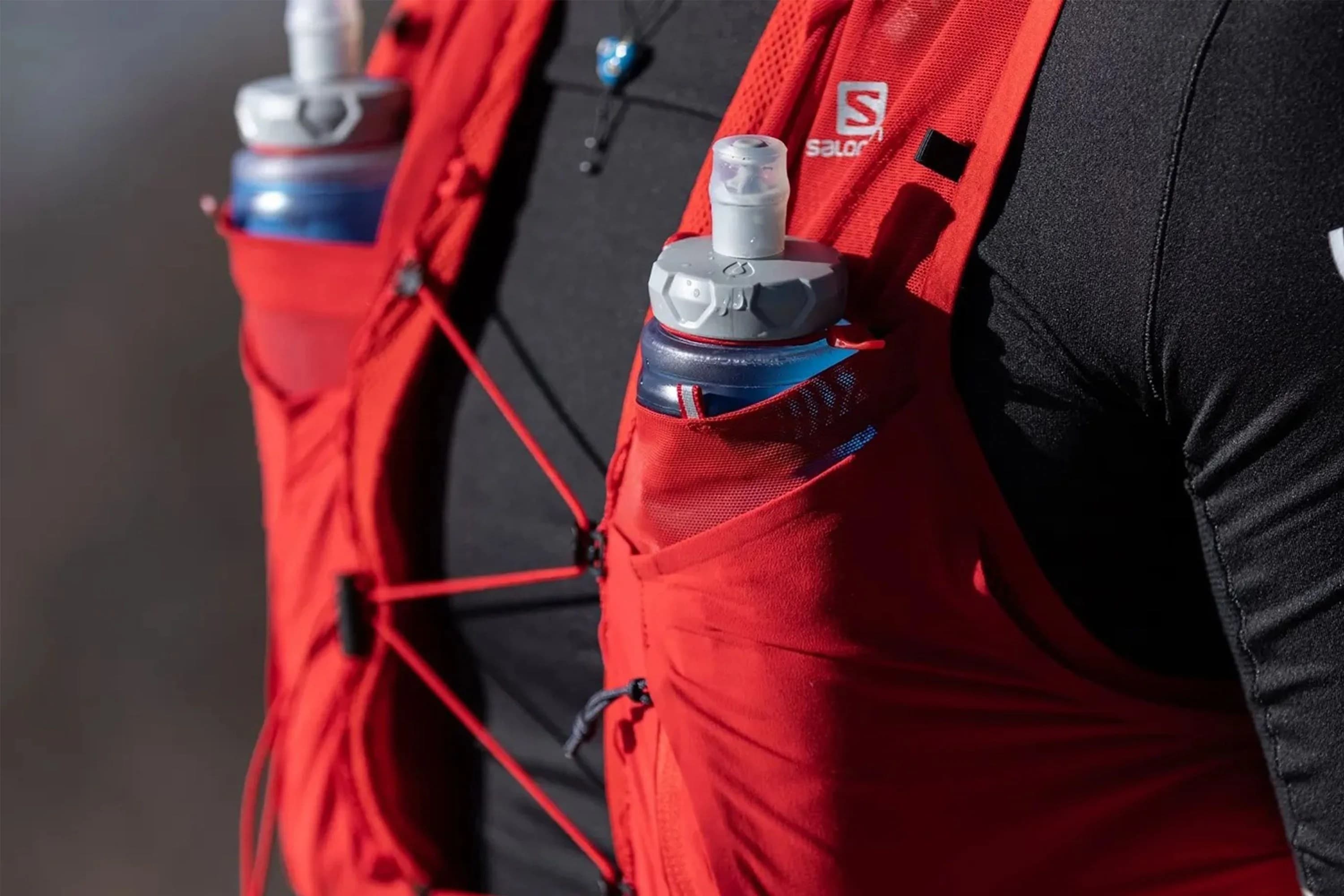
Some vests are pre‑routed for a 1.5 L or 2 L bladder; others rely on external bottles. If you prefer a jersey‑style bladder, confirm the vest has a secure sleeve and a hose routing channel that stays out of the way. If you favor bottles, make sure the pockets hold standard 500 ml or 750 ml bottles without stretching the fabric.
Weather protection features
Ultras swing from scorching sun to sudden rain. Look for water‑resistant fabric (polyurethane coating) and at least one removable, zip‑off rain sleeve or over‑vest. Insulated arm sleeves that tuck away when temperatures rise add extra versatility.
Durability and materials
Trail terrain is abrasive; a vest will get tossed against rocks, branches, and mud. Nylon ripstop with reinforced stitching is a solid baseline. Reinforced shoulder panels and a bottom hem extend the pack’s life where it’s most vulnerable.
Our picks
A lightweight 2‑liter option for fast‑track races
Targeting a sub‑12‑hour 50‑mile race on relatively smooth terrain? A minimal‑weight vest that holds roughly 2 L of water is the sweet spot. Look for a thin, single‑layer mesh back, an integrated 2‑L bladder sleeve, and a few low‑profile zip pockets for gels and a phone. The low center of gravity lets you maintain a quick cadence without the swing of larger packs.
Best for: Runners who prioritize speed and already have a solid nutrition plan that doesn’t require bulk.
Trade‑offs: Limited space for extra clothing or emergency gear, and the thin fabric offers less weather protection.
Shop this type: Check price on Amazon →
A 4‑liter insulated vest for cold‑weather ultras
Long, cold climbs demand extra layers, a warm hat, and maybe a small shelter system. A 4‑liter vest with insulated arm sleeves and a rain‑sleeve overlay supplies both capacity and protection. A split‑back design spreads weight across hips and shoulders, reducing lower‑back strain. Integrated zip compartments can hold a lightweight down jacket or emergency blanket, plus a dedicated pocket for a GPS watch.
Best for: Overnight or multi‑day ultras in cool to cold climates where you’ll pause for short rests and need to stay warm.
Trade‑offs: Added insulation and larger volume increase empty weight; you may feel a bit slower on flat sections.
Shop this type: Check price on Amazon →
A modular hybrid that can switch between vest and belt
Hybrid systems feature detachable shoulder straps and a core torso shell that clips onto a belt loop set. As a vest you get full capacity (often 3 L) and a stable back panel; clipped to a belt you keep only essential pockets and a small 500 ml bottle holder. This adaptability makes the pack useful year‑round, not just race day.
Best for: Runners who train on varied distances and want one pack that covers everything from a 10‑km tempo to a 70‑mile mountain run.
Trade‑offs: Modular connection points add a little bulk, and the belt configuration may feel less stable on technical downhills.
Shop this type: Check price on Amazon →
A high‑capacity, detachable bladder system for multi‑day events
Planning a 100‑mile expedition that spans two nights? A vest that houses a detachable 3‑liter (or larger) bladder becomes a lifesaver. The bladder can be removed at aid stations for quick refills, then re‑inserted without stripping the entire pack. Look for reinforced bladder sleeves, a side‑run hose channel, and multiple large zip pockets for freeze‑dried meals, a compact stove, and a sleeping‑bag liner.
Best for: Multi‑day or self‑supported ultras where you must carry substantial hydration and nutrition without frequent aid stations.
Trade‑offs: The vest’s size and weight are higher, and the extra hardware (bladder clips, hose loops) requires a learning curve.
Shop this type: Check price on Amazon →
How to choose
- Estimate water needs – Rough guideline: 0.5–1 L per hour, adjusted for temperature and altitude. Multiply by expected race duration for a minimum capacity.
- Rank environmental demands – Cold, rain, or heat push you toward insulated sleeves or extra ventilation.
- Test fit – Load the vest with a full bladder or bottles and jog a few minutes. Check shoulder pressure, waist compression, and any rubbing points.
- Check accessibility – On technical trails you won’t stop to unzip side pockets; front‑load or top‑pull designs win.
- Confirm hydration system – If you use a bladder, ensure the sleeve is snug and the hose stays out of the way. If you prefer bottles, verify pocket depth.
Align capacity, climate, fit, and access, and the vest will feel like an extension of your body rather than a burden.
FAQ
How much water should I carry in a hydration vest for an ultra?
A common rule is 0.5–1 L per hour, adjusted for heat, humidity, and altitude. For a 12‑hour race in moderate conditions, aim for 6–8 L total, split between a bladder and bottles to balance weight.
Can I wear a hydration vest in cold or rainy weather?
Yes. Choose a vest with water‑resistant fabric and removable insulated sleeves. Many models also include a zip‑off rain cover that protects both the pack and its contents.
Is a bladder better than bottles for long ultras?
Bladders keep the load low and centered, allowing hands‑free sipping. Bottles are easier to refill at aid stations and can be swapped quickly. Most runners use a hybrid: a 1.5–2 L bladder plus one or two 500 ml bottles.
How do I prevent my vest from bouncing on technical trails?
Look for a split‑back or skeleton frame that keeps the load close to your hips. Properly tightened shoulder, chest, and waist straps also minimize movement.
Do hydration vests have pockets for phones and GPS watches?
Most modern vests include at least one zippered front pocket sized for a smartphone and a separate elastic pocket for a GPS watch. Verify dimensions if you use a larger device.
Can I wash my hydration vest?
Yes. Most nylon or polyester vests can be hand‑washed in cold water and air‑dried. Remove any bladders and detachable components first, and avoid machine washing to preserve coatings and stitching.
Bottom line
Choosing a hydration vest for ultramarathon running comes down to matching capacity, fit, ventilation, and weather protection to the specific demands of your race. Whether you need a feather‑light 2‑liter pack for speed, an insulated 4‑liter model for cold mountain miles, a modular hybrid for training versatility, or a high‑capacity detachable bladder system for multi‑day adventures, the right vest will keep you hydrated, fueled, and comfortable so you can focus on the finish line. Happy packing and good luck on the trail!
%3Amax_bytes(150000)%3Astrip_icc()%2Fmerrell-womens-vapor-glove-6--030ae97f23a64334949ef9f7214cf30f.jpg&w=3840&q=75)